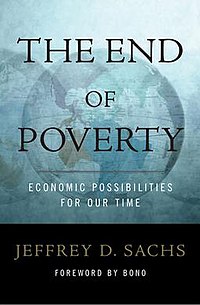
 In this book Sachs attempts to make an argument for his plan to end global extreme poverty. There will always be "the poor" because there will always be those that have less than others. However, the world has the resources to end extreme poverty - a state in which people's daily needs are not being met - needs like clean water, food, clothing. Ideally this plan would also provide electricity, access to health care, and comprehensive education for children as well.
Sachs begins by sharing success stories from his personal life - helping Poland and Bolivia get on track. He also looks at India and China and their attempts to end extreme poverty internally. However, as he points out, in Poland it took forgiveness of debts and some foreign aid to help their economies move forward. Sachs then moves on to look at the probelms facing the poorest nations. He then unveils his plan. Basically, the largest part of the plan is to increase the power of the UN and its agencies and to have every wealthy nation give 0.7% of their GDP (or more) to fight poverty. He suggests a few other things as well to help the efficiency of things and to combat specific problems that require more than financial resources. He seems to like how doctors work to diagnose disorders. He provides a diagnostic tool that countries should use.
I felt persuaded by Sachs's arguments. I feel like they are reasonable and agree with him that the U.S. is not doing their part by giving BY FAR the smallest percentage of their GDP to foreign aid (at least out of rich nations). However, I am not the best resource for assessing economic ideas, given my general ignorance of the subject.
I think this is a good book, although I found it boring at times (due to interest, mostly), but again I'm not the best resource for this.
Rating: 3 out of 5 stars
(87/100)

No comments:
Post a Comment