Thursday, May 26, 2011

Theaetetus

I picked out Plato's Theaetetus because it was short-ish, and I've not read much by Plato. I wasn't ready for it. Too busy, too stressed, and too distracted. It's an interesting dialogue about knowledge, and it ends with a philosophical discussion about parts and wholes that is very similar to Paul's writing in Corinthians where he talks about how we are all one body with many parts. I'm sure Paul's letter was in some way influenced by Plato's philosophy.

I think I'll have to return to Plato, though, when I'm better able to focus on his writing. There's a lot there that I'm afraid that I missed, but I don't think re-reading it now will do the trick. Plato may very well be like Shakespeare - you have to immerse yourself in several works by the writer before you truly pick up the nuanced details.


Rating: I can't fairly give this a rating. I haven't read enough Plato to appreciate his work.


21 books, 87 days...at this rate I'll read 88 books.

Tuesday, May 24, 2011

Opposing Viewpoints: Food

Ah, a nice quick read was just what I needed! Food is one of the many publications by the company Opposing Viewpoints. All of their books take on a controversial issue of some sort and show arguments for the different sides. They are a fantastic resource for people trying to discover more about a topic.
I wish things like this were more popular. It's refreshing to hear both sides of a debate from the same source.

The book, as they all are, is divided into sections based on subtopics. In this case, the topics included farming styles, treatment of animals, genetically altered food, factors for obesity, and a few others. Each subtopic then has at least two opposing articles. They are short (sometimes shortened from the original) and typically fairly easy to read while still carrying a fair amount of research and depth.

Food was interesting, although I am pretty familiar with most of the topics and arguments. I would recommend this book to anyone who wants to know more about some of the controversial topics surrounding food. The only "problem"? You have to decide for yourself what you believe.

For a list of topics they cover, you can go to http://en.wikipedia.org/wiki/Opposing_Viewpoints_series and see if your local library carries any title you are interested in.

Rating: 3.5 out of 5 stars


20 books, 84 days...at this rate I'll read 87 books

Sunday, May 22, 2011

The Windup Girl

Sigh...I've been so busy lately, and I haven't had as much time to read! That will likely be the case for the next several weeks, but I've got some quick reads up next.

Paolo Bacigalupi's The Windup Girl takes place in a sort of post-apocalyptic world that has been devastated by major crop diseases. The currency of this world is the calorie. Wars are fought, crime occurs, and major political upheaval all centers around food - what little of it remains. Thailand serves as the backdrop of this dismal future and Bacigalupi paints it vividly. His mind is extraordinary - this is a sci-fi book that was well thought out and researched. However, the characters fall flat and the plot is underdeveloped. The main character (if there is one - there are so many characters) is Emiko, a genetically manipulated android, originally from Japan, now serving as a sex slave. Her savior is Anderson, a worker for a calorie company. They try to escape the sex slave scene and the government, culminating in an epic explosion and the revealing of secrets.


Now, that does have the potential to be a great story - but 2/3 of the book is spent setting things up, introducing characters, and exploring the world. If this were an epic 500-600 page book, that might work. The world ends up being pretty well developed, but the plot lines minimal and the characters dismal. There are perhaps 20-plus characters that play a role in the story, and the only one who is developed at all is Emiko. The rest are hollow shells and it's honestly hard to keep them all straight. If they were better developed or more interesting, I would have made the effort to figure that all out. Not the case here.


Bacigalupi is clearly an idea-man with a general knack for writing. I'm slightly interested in reading more by him, but I'm not ready to risk another book with weak characters and an underdeveloped plot.


Rating: 2.5 out of 5 stars


19 books, 82 days...at this rate I'll read 84 books

Saturday, May 14, 2011

I Watched a Wild Hog Eat My Baby

I got I Watched a Wild Hog Eat My Baby: A Colorful History of Tabloids and Their Cultural Impact by Bill Sloan because of its provocative cover. I was also interested in the subject matter. Ever since I was a kid, I've been curious about how tabloids are able to print ridiculous headlines and obvious lies about famous people.

This book has a little information about how tabloids are made, but the bulk of the book recounts the history of tabloids from the eyes of someone who works in the tabloid business. The history stuff would have been interesting if it encompassed only 2-3 chapters instead of 90% of the book. Honestly, who really cares about the history of tabloids? It would be like reading about the history of soap operas - what's the point? Granted, there is some drama in tabloid history, and a few interesting tales and a lengthy appearance by Rupurt Murdoch (who got his start in the tabloid business, which makes sense given Fox News's lack of journalistic integrity). I would have loved to know more about the inside of the tabloid writing process. 2-3 chapters' worth of the book gives some of its secrets, and that stuff is pretty neat, but nothing all that unexpected.

Overall, while being disappointing, it still was a well-writing and fairly compelling book.

Rating: 3 out of 5 stars

18 books, 75 days...at this rate I'll read 87 books.

Monday, May 9, 2011

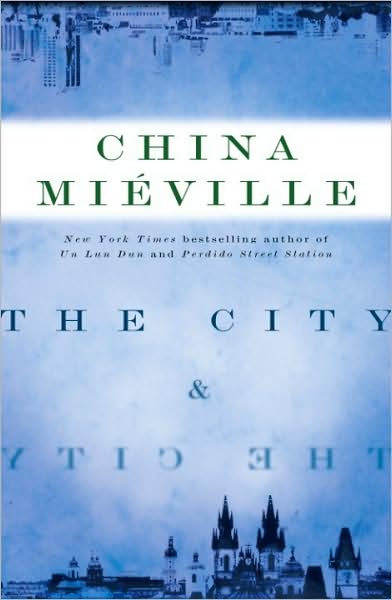
The City and The City

China Mieville's The City and The City is a classic example of an excellent idea with mediocre execution. The book follows Tyador Borlu, a detective assigned to solve a murder case. The twist is that the book takes place in a unique setting. The cities of Beszel (run-down metropolis) and Ul Qoma (booming modern metropolis) occupy the same physical space but have different social and political systems and are completely different in character. To find the murderer, Borlu has to go back and forth from one city to the next, a task more difficult than you might imagine.

This idea sounds wickedly awesome. I can already imagine it as a graphic novel or movie. It's a unique fantasy world that presents areas as of yet unexplored in most peoples' minds.

However, Mieville's creation is flat and uninspired. The characters are perhaps the most uninteresting and bland characters I have ever come across in a serious work of fiction (as opposed to throwaway pop-fiction). I could not connect to any of the characters in the book, and I actually didn't even care if I did or didn't. Auxiliary characters all blended into one generic character in my mind.

Additionally, the crime investigation, which plays a large role early on, fades to the background at the halfway point in the text while the fantasy world comes to the forefront. This was perhaps Mieville's biggest mistake. He really ought to have focused on one thing or the other: the mystery or the fantasy. If he had focused on the mystery, the fantasy element would have made things intriguing and would make one want to read on to find out more about this mysterious and odd city within a city setting. If he had focused on the fantasy, he could have developed the world to its full extent, teasing with various issues and problems that arise with two places sharing one physical space.

Instead, you get a half-developed fantasy and a half-developed mystery. When the murderer is revealed, it didn't seem to matter very much because the mystery was mostly ignored in the second half.

Mieville seems to want to return to this premise, and it's likely, given this book's generally very favorable critical reviews. I'm not sure why the critics liked it so much - perhaps its novelty alone was enough to give it merit to critics weary of the same story told again and again. However, if he returns, I hope he dives in all the way.

Rating: 2 out of 5 stars

17 books, 69 days...at this rate I'll read 90 books.
Thursday, May 5, 2011

Pure Scum

This book, Pure Scum, by Mike Sares, details the history of Scum of the Earth Church. It was founded by Sares along with a member of Christian ska-punk band Five Iron Frenzy.

It certainly is an interesting book at times, particularly the thinking behind the church. However, it begins with a biography of Sares which seems rather overly self-focused. Then it switches gears to talk about the church, but mostly through Sares' eyes. Granted, the book is written by him but I felt as if he spent much of the book repeating the following three ideas:
1.) My church is awesome and so much better than all other churches
2.) I am awesome because I have major connections with Five Iron Frenzy
3.) Jesus has done great things throughout my life and the life of the church

When he focuses on point number 3, the book is excellent, compelling, and spiritually uplifting. When Sares becomes self-focused the book loses steam and was particularly annoying to me - a non-member of his church who isn't (and never was) a fan of Five Iron Frenzy.

It's not that bad, though. There's a lot of good stuff in the book and the church itself has some interesting characters and stories. I love that the church intentionally reaches out to those who don't exactly fit the mold of a "typical Christian" who often find churches to be unwelcoming places. Some of the initiatives carried out through the Scum of the Earth Church are unique. In the people and the stories of faith lie the magic of the text.

Rating: 3.5 out of 5 stars

completed 5/4/11....16 books, 65 days...at this rate I'll read 90 books

Tuesday, May 3, 2011

The Mark

My latest read was The Mark by Jerry Jenkins and Tim LaHaye, the 8th book in the Left Behind series. In this book, the Carpathia regime is beginning the push for global residents to receive "the mark" that identifies them as loyal followers of Carpathia, who has risen to deity-status in the minds of many after his death and resurrection. The "Tribulation Force" has to hatch a plan to survive without receiving the mark, because people who don't comply will be killed.

This is the first book I'm reading that I hadn't read in its entirety in High School. I think I read about half of it and put it down to never pick it up again until now. Like all of the Left Behind books, the writing is poor and the characters are flat and dull. Still, there's plenty of action, and the plot points continue to move forward at an accelerated rate. So it's an easy and somewhat entertaining book with little to no literary merit.

I'm reading out of curiosity, and the Left Behind books provide a nice break from denser material. I'll finish the original series (ending with the Glorious Appearance) mostly to see where the popular series goes.

Rating: 2 out of 5 stars


finished 5/1. 15 books, 62 days...at this rate I'll read 88 books.