Thursday, December 29, 2011

$20 Per Gallon

Reading Christopher Steiner's $20 Per Gallon: How the Inevitable Rise in the Price of Gasoline Will Change Our Lives for the Better was like breathing in a breath of fresh air.

$20 Per Gallon explores what the world and average American life would look like at different levels of gasoline prices. There's no doubt that petroleum is running out: even the big oil execs (like T. Boone Pickens) have admitted that. There's still enough for now, but gas prices will inevitably rise - and some day at a much faster rate than what we see currently. Steiner goes with this premise and has a chapter for each even dollar increment: $4, $6, $8, and so on up to $20 a gallon for gas.

Unlike many environmentally-themed books, this one does not get preachy. Steiner did not write this book to push an agenda. He simply explores what each price level of gas would do to society. He does show some of the negative effects of high gas prices, but also explains what benefits would come as well. Rather than presenting a doom-and-gloom book, Steiner winds up creating a mostly hopeful depiction of a society weaning itself off of petroleum.

Each chapter took on a gas price and focused in on a particular issue that would be most impacted at a particular level. At $6 SUVs will in extremely low demand, at $8 air travel becomes too costly for most people,  at $10 gasoline-only cars become irrelevant, and so on. Steiner did his research on the big topics but gives educated guesses on what other changes may happen at each level.

It was very exciting to read this book. His goal of depicting high gasoline prices as a societal blessing was achieved. I hope that our society can keep up with the technological advancements required to prevent society from degrading into mass chaos. If we can, and if people can give up their stubborn selfishness, the world may very well become a much better place with $20 gasoline than it was with $1, $2, or even $4 gas.

I'd recommend this book to just about anyone interested in these topics!

Rating: 4 out of 5 stars

96/100

Tuesday, December 27, 2011

Celtika

Celtika, by Robert Holdstock, tells a tale of Merlin, before Arthur. Holdstock's Merlin is an ancient sorcerer whose origins extend back to the beginning of humankind. He serves an instrumental role in the mythology of Ancient Greece, and several hundred years after that era, this story picks up.

In Celtika, Merlin finds himself drawn to the ancient ship Argo, which calls to Merlin from a frozen lake. Merlin finds within the ship the body of Jason, whose soul is as frozen as the lake itself. Merlin wakes Jason and as he rises from his long-lasting slumber comes back to life. From there, they assemble a team of men (and a couple of women) to reassemble the Argo and bring life back to it.

Along the way, however, Jason discovers that he has a living son that he once believed dead. The journey evolves to center as much around Jason's son as the Argo. Along the way, Merlin encounters the relative of a past lover, a forest spirit, and a noble regal warrior Urtha, with whom he develops a close friendship. In the end, battles will be fought, lovers reunited, and two nasty duels will determine the future of Merlin and Jason's crew.

This book surprised me. I've been mostly disappointed by the Sci-Fi and Fantasy books I've read over the past year. I had fairly low expectations as I began Celtika, but as I read I noticed a richness absent from most recent entries in these genres. Holdstock clearly put a lot of thought into this tale. I did find the multitude of characters a bit off-putting at first, but by the end I felt very comfortable with all of the connections and societal structures. If I were to continue reading this series (it's the first of at least three books), I would be able to jump right in. The setup for the Arthurian Merlin worked, and I'd be interested to perhaps read the next book at some time in the future. I felt as if Holdstock was able to balance the Fantasy world with the bitter reality of life in era of the book (which is never directly specified, but clearly between 1500-2500 years ago).

This book still primarily for fans of Fantasy. Lovers of Greek Mythology and followers of the tales of King Arthur will also find a lot of merit in this book. Other readers looking for a decent fantasy may enjoy this book, although one should be warned that it still is a genre book. By genre book I mean a book that is tailored to fans of a particular genre, carrying certain characteristics, plot tactics, and overall tone. Generally these books are mass-produced and sometimes written by a team of writers (this one is not), and are meant to be predictable in their style. It's a good "genre book," but don't expect it to blow you away.

Rating: 3.5 out of 5 stars

(95/100)


Friday, December 23, 2011

A Fistful of Rice

A Fistful of Rice: My Unexpected Quest to End Poverty Through Profitability, by Vikram Akula, tells the story of Akula's for-profit microfinance organization, SKS Microfinance. Microfinancing has become increasingly popular over the past several years. The main idea revolves around small loans, which are distributed to (typically) women in poor countries. These women take the small loan and use it to establish a small business, a farm, or something like that. They then repay their loan with interest. This model has proven its effectiveness time and time again. People living in this state of poverty only need a small jump start financially in order to make a living.

Most agencies that do this operate as nonprofits. Akula argues, however, that higher profits allow for faster expansion and the ability to reach out to a greater number of struggling people. SKS Microfinance has enjoyed great levels of success and, at least by Akula's account, have engendered a greater level of trust in their members than the government of India. I should have mentioned earlier that as of now, SKS operates primarily in India, Akula's country of birth.

Akula's rise to the top has an interesting back story. Born in India, Akula's family moved to the United States to seize the opportunities open there for well-educated foreigners. There they grew to enjoy a comfortable lifestyle. However, during visits to his native country, Akula felt that he needed to do something for the poor. The poor in India are nothing like the poor in America, he realized, and have urgent yet simple needs. After graduating from college, he went on to work for a Microfinance institution only to discover the limitations that faced the nonprofit organization. People begged Akula for loans that he could not offer due to financial limits. This inspired Akula to start his own business.

Akula had a rough time getting SKS off the ground. Once it did, however, it grew exponentially. Before long, Akula found himself on the list of Time's 100 Most Influential People. He has been able to reach over 6 million people and more recently began providing cheap (and reliable) insurance as well as an Ultra-Poor program that provides basic needs (for free) to the most desperate and destitute of the poor in India.

All of this sounds great, and made for an easy and relatively fun read for someone not particularly interested in economics (it helps that I love India). However...

Just about a month ago, SKS hit some hard times. Critics have long bemoaned the high interest rates (28%) that SKS charges. Between that and reports of overly aggressive loan officers and a series of suicides of SKS members cause the stock to dive, investors to pull out, and Akula to step down as CEO. Oops.

So while I enjoyed reading this book, I'm hesitant to recommend it because, after all, it doesn't exactly have a happy ending.


Rating: 3.5 out of 5 stars

94/100

Wednesday, December 21, 2011

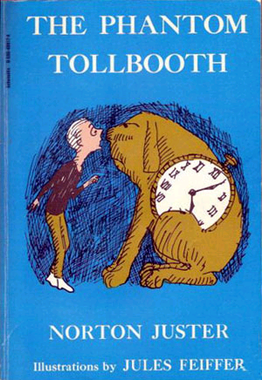
The Phantom Tollbooth

This is my third time reading Norton Juster's The Phantom Tollbooth. The first time I was in third grade and while I was interested in the illustrations, I found the book terribly boring. I abandoned it after reading about 50 pages. The first time I finished it I was in 5th grade, and I enjoyed it...so I read it again in 7th grade and loved it even more. Now, over a dozen years later, I returned to Juster's world a third time (from start to finish).

In this story, boring and apathetic Milo has no clue what he ever wants to do. As it seems, he always prefers to do that which he is not doing at the present moment. He is a dull boy until one day he finds a toy tollbooth in his room. He takes a toy car of his, passes by the tollbooth, and finds himself in another world.

Through the book you follow Milo's adventures, accompanied by Tock, a literal watchdog, and the Humbug, a rather curmudgeony insect who thinks he knows much more than he actually does. They lull in the Duldrums, visit the land of Dictionopolis - the land of words, jump to the Island of Conclusions, roam the Valley of Sound, explore the world of Digitopolis, and eventually brave the Demons of Ignorance before attempting to rescue Princess Rhyme and Princess Reason.

Juster creates a magical world that is as funny as it is clever. He intertwines some of the most clever wordplay to ever appear in a book, but under it all is a poingant message: the real world has more fun things in it than you'd ever have time to explore. There are plenty of other lessons and interesting insight, but to find them, you have to read the book yourself.

This is one of my favorite fiction books of all time. If I kept a top ten, it would have a permanent place there. As an adult, I believe I loved reading this even more than I did as a child. Few books parallell Juster's creativity and cleverness. Lewis Caroll's Alice books come to mind, but off the top of my head I can't think of many other books that combine rich fantasy worlds with clever real-world fun.

Rating: An absolute classic, on par with any other fiction book ever written (in my opinion)

93/100

Renewable Energy

Greenhaven Press's Opposing Viewpoints series never seems to fail. I've read maybe 7 or 8 of them (there's literally dozens of titles) and they've all been pretty much the same. Each one takes a controversial issue and presents articles that fall on one side of the issue or another. They are typically very well compiled and do a fair job at providing every angle to educate the reader on the complexities of the issue. This book takes on Renewable Energy.

This book looks at all kinds of renewable resources and alternative energy sources. It looks at issues like: "Is nuclear power renewable?" "Are renewable resources environmentally responsible?" "Are fuel cells a viable alternative to gasoline?" "Is hydrogen a legitimate future energy source?" and more.

This book, more so than some of the others I have read, really did an excellent job of detailing the complexities of renewable resources. At the end, I found myself a bit perplexed. After being introduced to both the hopes and the problems with each type of renewable/alternative energy sources, I found it difficult to take a strong stance on any of the sources! In the end, my conclusion was that maybe we need to do a little bit of everything. Obviously, reliance on any one - or two - or three - types of energy is a setup for failure.

Every energy source has its benefits and drawbacks. For example, Wind energy is 100% renewable but is also unreliable and obtrusive to the environment. Hydrogen is efficient and clean but dangerous to deal with and problematic in other ways. Fossil Fuels are incredibly efficient and inexpensive (for now), but have devestating effects on the earth, pollute like crazy, and are running out.

I always enjoy these books, but some articles are better than others. Some articles are very abridged, and a couple came from questionable sources. One mini-article was a letter to the editor!

All in all, this is an excellent choice for becoming knowledgeable about the complexities of renewable energy.

Rating: 4 out of 5 stars

(92/100)

Sunday, December 18, 2011

March

March, by Geraldine Brooks, won the Pulitzer Prize for fiction just a few years ago. I selected it on that basis, but was surprised to read on the jacket cover that it is essentially a fan fiction book. March draws its inspiration from Little Women. I was read aloud Little Women as a child, but I remember nothing from it. I was a bit skeptical going into this book.

As it turns out, my ignorance of Alcott's works had little impact on my experience throughout the book. Brooks follows the story of Mr. March, the absent father in Little Women, as he serves as chaplain to the Union army during the Civil War. Along the way he sees the ravages of war and sees the span of beliefs towards slavery and African-Americans. Along the way, he is shot but heroically rescued. The rest of the book comes mostly from his wife's point of view as he struggles to hold on to his life.

March is a well-researched historical fiction, probably more suitable to fans of Alcott's books, but still accessible to anyone. Brooks clearly possesses a gift for writing. I found the discussions surrounding slavery and the rights of African-Americans to be the most interesting part of the book. March meets people on all points on the spectrum on both Union and Confederate sides. He also befriends many African-Americans, serving as their pastor and teacher.

I mostly enjoyed this book. It still surprises me that this book earned a Pulitzer Prize - it doesn't seem to be of the same calibre as other Pulitzer winners I have read over the past few years. I would recommend this book to fans of Little Women and historical fiction.

Rating: 4 out of 5 stars

(91/100)

Saturday, December 17, 2011

Joy at Work

I've been working for one of Dennis Bakke's Imagine Schools for almost 3 years now, so I felt that it would be fitting that I finally get to reading Bakke's book, Joy at Work.

In this book, Bakke describes his outline for fostering a workplace that people enjoy working at. He claims that this model also allows for a successful and more productive workplace as well. At the core are four shared values: fairness, social responsibility, integrity, and fun. He also shares some ideas he has that achieve these goals. Central to his ideology is a playing field where management and "the workers" are placed on an almost-level playing field. Throughout the book, Bakke tells his story of being the CEO of AES and bits and pieces of his life story.

I had mixed feelings about this book. I work for one of his schools, but thanks to Pennsylvania law, I'm not actually an employee of Imagine Schools, I'm an employee of the ECS board of trustees. Bakke infuses a lot of Christian theology in the book (and includes a postscript that details how Christianity influenced his thinking and workplace philosophy), and that got me thinking as well. So here goes...my 3 reactions:

As a teacher in an Imagine School: Even though our school is not run (only financed) through Imagine Schools, we do try to incorporate these ideas in our school. I love working for ECS, and many other people do as well, but I would not say that there is an overall joy among staff members. One problem is that the shared values are oddly defined. In the schools he has boiled it down to three: justice, integrity, and fun. Justice is supposed to mean special treatment for everyone - some people can get more special treatment than others, too. Integrity is actually pretty close to the standard definition, so no issues there. Fun is the worst. Bakke defines fun as "decision-making," and that big decisions should be made by just one person. I disagree with that.

As a Christian: I greatly respect Bakke's faith. I admire his courage to be an outspoken Christian as a CEO. I think his attempts to instill Christian values in the workplace are noble. We certainly need more leaders like that. However, I believe that the only way you can have joy is to have joy in your heart. Joy comes from Christ, so without that real, true joy in your heart, there will be no joy at work. No program or shared values system is going to do the job that only Jesus can do. Bakke also makes some theological statements throughout the book that seem out of place and one of them right at the end was scripturally problematic, but I'm not here to tear apart a fellow Christian. I think his overall idea that people should embrace their Godly vocation - whatever it is - is a poignant message.

As a reader of all kinds of books: As a voracious reader, I don't know what to think. I know next to nothing about economics or running a business. A lot of Bakke's ideas sound pretty good, and it seems like his employees enjoyed this model. It was refreshing to read the simplicity and the apparent efficiency of his model. However, I think that it is important to note that his company was not particularly successful during his time as CEO. Ultimately, employee satisfaction is more important (I think) than profitability, but it's concerning that his model did not succeed from an economic standpoint.

The book itself...well...Bakke is not a writer. He's a businessman. The book lacks an overall focus. It's supposed to about joy at work, yet Bakke includes quite a lot of autobiographical information and at times reads like a memoir. He even includes a picture section in the middle with pictures from his life! He writes towards the beginning of the book that he had a bunch of ideas that he wanted to put into one book, and he wanted that book to be the only book he would ever need to write. That's what he did. What you get is a book that is part memoir, part business tome, part Christian inspiration: a mediocre mix with noble aims that fall short of their goals.

Rating: 2.5 out of 5 stars

90/100

Tuesday, December 13, 2011

Lord of the Flies

I really ought to have read this book a long time ago. William Golding's Lord of the Flies has earned quite a bit of noteriety, mostly because it always finds itself on the list of most frequently challenged or banned books. On the other hand, it's also considered to be a literary classic.

Lord of the Flies tells the story of a group of boys who, after being stranded on an island after a plane wreck, attempt to establish their own society. Before long their personalities really come out. Ralph is the leader who starts off strong but becomes increasingly timid and fearful, Jack is the bloodthirsty hunter, Simon is the adventurous one who displays just a bit too much curiosity, and Piggy is the annoying yet reasonable intellectual.

As one might expect, a society run by young boys is set up for failure. The first couple of days go well but before long the boys stop doing their part and tensions increase between the two leaders: Ralph and Jack. Meanwhile, they are haunted by a mystical "Beast" who is later revealed to be the Lord of the Flies. It's not long before all hell breaks loose.

Golding's purpose in writing this was to display the innate flaws of humankind - the natural sinful state. He does this with great flourish. The mood maintains its intensity throughout the entire book, even at the beginning when things are going relatively well. He uses a great deal of allegory, symbolism, and metaphors to accentuate this. The tale is grim, yes, but is still poingant and gripping.

As a side note, fans of Lost will notice a lot of similarities between the first season of the TV show and the story in this book. The influence is overwhelmingly evident - I wouldn't be surprised if this book was the source of inspiration that kick-started the development of the series. I'm not sure if it's a homage to the book or blatant plagarism, but the parallells are definitely there and not just a coincidence. The Lost writers give tribute to this when they have Sawyer reading Lord of the Flies in several episodes.

Should this book be banned in schools? Absolutely not. There's nothing overly objectionable...a few mild profanities (nothing you don't hear a million times on TV), a bit of violence (again, nothing you don't see a billion times on TV - even on some kids' shows), and an overall grim view of humanity (that's legit, but it's appropriate). I wouldn't recommend this book to anyone under the age of 12 or 13, not because of inappropriate material, but because of the richness of the writing. Most children under the age of 13 will miss some of the best stuff in the book because it will fly over their heads. It's probably too grim for kids under 10, but they would most likely struggle to read it anyhow. But banned...no.

This is a fascinating book for teens and up. Fans of Lost will enjoy finding the connections. This book has definitely earned its place as a classic. It was a compelling and thought-provoking read...the best kind!

Rating: CLASSIC!

(89/100)

Thursday, December 8, 2011

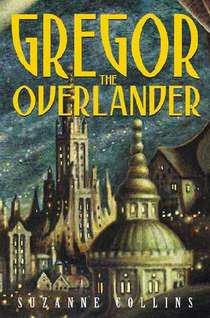
Gregor the Overlander

Plenty of authors have come forth with series to ride the Harry Potter wave of success or perhaps dethrone its reign as Young Adult fantasy king. Currently two series are on top: Twilight and The Hunger Games. Suzanne Collins is the author of The Hunger Games, but before she wrote that series she wrote Gregor the Overlander.


Collins's goal when writing Gregor and the books that follow it was to create a mythology that would resonate with kids who live in the city. Most fantasies revolve around pastoral themes with animals uncommon to urban environments. So instead of fantasy meadows filled with dragons, unicorns, and talking badgers, we have an underground world beneath New York City filled with talking cockroaches, giant bats, and vicious rats. Here a small society of humans have lived for many years, bonding with bats that they fly on, and fighting back rat attacks.

Gregor accidentally finds this world when his little sister Boots tries to climb into a dryer vent in the apartment complex they live in. Suddenly they are sucked in and taken to the Underland. There Gregor meets a band of giant talking cockroaches who lead him to the society of humans. There, he realizes that he is at the center of a major Underland prophecy. Gregor is an Overland "warrior" who will end the war against the rats. Astonished at this (in disbelief), Gregor seeks escape so he can return to his mother. However, when it is revealed that his long-lost father lives in Underland as a prisoner of the rats, Gregor finds that he has no choice but see if he is the mighty warrior of Underland prophecy.

For a children's fantasy, this book is pretty short. It has a pacing similar to the first two Harry Potter books. Like those books, it is a self-contained story with a promise of more to come. It also moves fairly quickly and never really digs deep under the surface (pun intended, after the fact). We meet an interesting cast of characters, get a taste of the Underworld mythology, run into a surprise or two and then the book ends. While it is pretty clever, it isn't nearly as rich as some of the other fantasy series out there for kids. That might make it more appealing, though, to a reluctant reader.

Parents and educators should be aware that there is a bit of violence in this book and several characters die. That said, it's much less violent (so I hear) than the Hunger Games books. It's age appropriate for 9 and up, but might be a bit much for sensitive children younger than that.

Overall, the premise was interesting, the mythology off to a good start, and a good mix of action and humor. That made up for some bland secondary characters and a lack of overall depth. It didn't suck me in...so I don't know if I'll read the rest of the series, but if I do, it should be fun. Perfect for kids 9 to 13.

Rating: 4 out of 5 stars

(88/100)

Tuesday, December 6, 2011

The End of Poverty

Jeffrey Sachs, author of The End of Poverty, is one smart guy. Unfortunately, my interest level  in economics is pretty low. I picked this book because I'm passionate about poverty, and I believe that attempting to end it is a necessary feat. That said, I understand so little about economics (what works/what doesn't) that I had a tough time with this book.

In this book Sachs attempts to make an argument for his plan to end global extreme poverty. There will always be "the poor" because there will always be those that have less than others. However, the world has the resources to end extreme poverty - a state in which people's daily needs are not being met - needs like clean water, food, clothing. Ideally this plan would also provide electricity, access to health care, and comprehensive education for children as well.

Sachs begins by sharing success stories from his personal life - helping Poland and Bolivia get on track. He also looks at India and China and their attempts to end extreme poverty internally. However, as he points out, in Poland it took forgiveness of debts and some foreign aid to help their economies move forward. Sachs then moves on to look at the probelms facing the poorest nations. He then unveils his plan. Basically, the largest part of the plan is to increase the power of the UN and its agencies and to have every wealthy nation give 0.7% of their GDP (or more) to fight poverty. He suggests a few other things as well to help the efficiency of things and to combat specific problems that require more than financial resources. He seems to like how doctors work to diagnose disorders. He provides a diagnostic tool that countries should use.

I felt persuaded by Sachs's arguments. I feel like they are reasonable and agree with him that the U.S. is not doing their part by giving BY FAR the smallest percentage of their GDP to foreign aid (at least out of rich nations). However, I am not the best resource for assessing economic ideas, given my general ignorance of the subject.

I think this is a good book, although I found it boring at times (due to interest, mostly), but again I'm not the best resource for this.

Rating: 3 out of 5 stars

(87/100)