Thursday, December 29, 2011

$20 Per Gallon

Reading Christopher Steiner's $20 Per Gallon: How the Inevitable Rise in the Price of Gasoline Will Change Our Lives for the Better was like breathing in a breath of fresh air.

$20 Per Gallon explores what the world and average American life would look like at different levels of gasoline prices. There's no doubt that petroleum is running out: even the big oil execs (like T. Boone Pickens) have admitted that. There's still enough for now, but gas prices will inevitably rise - and some day at a much faster rate than what we see currently. Steiner goes with this premise and has a chapter for each even dollar increment: $4, $6, $8, and so on up to $20 a gallon for gas.

Unlike many environmentally-themed books, this one does not get preachy. Steiner did not write this book to push an agenda. He simply explores what each price level of gas would do to society. He does show some of the negative effects of high gas prices, but also explains what benefits would come as well. Rather than presenting a doom-and-gloom book, Steiner winds up creating a mostly hopeful depiction of a society weaning itself off of petroleum.

Each chapter took on a gas price and focused in on a particular issue that would be most impacted at a particular level. At $6 SUVs will in extremely low demand, at $8 air travel becomes too costly for most people,  at $10 gasoline-only cars become irrelevant, and so on. Steiner did his research on the big topics but gives educated guesses on what other changes may happen at each level.

It was very exciting to read this book. His goal of depicting high gasoline prices as a societal blessing was achieved. I hope that our society can keep up with the technological advancements required to prevent society from degrading into mass chaos. If we can, and if people can give up their stubborn selfishness, the world may very well become a much better place with $20 gasoline than it was with $1, $2, or even $4 gas.

I'd recommend this book to just about anyone interested in these topics!

Rating: 4 out of 5 stars

96/100

Tuesday, December 27, 2011

Celtika

Celtika, by Robert Holdstock, tells a tale of Merlin, before Arthur. Holdstock's Merlin is an ancient sorcerer whose origins extend back to the beginning of humankind. He serves an instrumental role in the mythology of Ancient Greece, and several hundred years after that era, this story picks up.

In Celtika, Merlin finds himself drawn to the ancient ship Argo, which calls to Merlin from a frozen lake. Merlin finds within the ship the body of Jason, whose soul is as frozen as the lake itself. Merlin wakes Jason and as he rises from his long-lasting slumber comes back to life. From there, they assemble a team of men (and a couple of women) to reassemble the Argo and bring life back to it.

Along the way, however, Jason discovers that he has a living son that he once believed dead. The journey evolves to center as much around Jason's son as the Argo. Along the way, Merlin encounters the relative of a past lover, a forest spirit, and a noble regal warrior Urtha, with whom he develops a close friendship. In the end, battles will be fought, lovers reunited, and two nasty duels will determine the future of Merlin and Jason's crew.

This book surprised me. I've been mostly disappointed by the Sci-Fi and Fantasy books I've read over the past year. I had fairly low expectations as I began Celtika, but as I read I noticed a richness absent from most recent entries in these genres. Holdstock clearly put a lot of thought into this tale. I did find the multitude of characters a bit off-putting at first, but by the end I felt very comfortable with all of the connections and societal structures. If I were to continue reading this series (it's the first of at least three books), I would be able to jump right in. The setup for the Arthurian Merlin worked, and I'd be interested to perhaps read the next book at some time in the future. I felt as if Holdstock was able to balance the Fantasy world with the bitter reality of life in era of the book (which is never directly specified, but clearly between 1500-2500 years ago).

This book still primarily for fans of Fantasy. Lovers of Greek Mythology and followers of the tales of King Arthur will also find a lot of merit in this book. Other readers looking for a decent fantasy may enjoy this book, although one should be warned that it still is a genre book. By genre book I mean a book that is tailored to fans of a particular genre, carrying certain characteristics, plot tactics, and overall tone. Generally these books are mass-produced and sometimes written by a team of writers (this one is not), and are meant to be predictable in their style. It's a good "genre book," but don't expect it to blow you away.

Rating: 3.5 out of 5 stars

(95/100)


Friday, December 23, 2011

A Fistful of Rice

A Fistful of Rice: My Unexpected Quest to End Poverty Through Profitability, by Vikram Akula, tells the story of Akula's for-profit microfinance organization, SKS Microfinance. Microfinancing has become increasingly popular over the past several years. The main idea revolves around small loans, which are distributed to (typically) women in poor countries. These women take the small loan and use it to establish a small business, a farm, or something like that. They then repay their loan with interest. This model has proven its effectiveness time and time again. People living in this state of poverty only need a small jump start financially in order to make a living.

Most agencies that do this operate as nonprofits. Akula argues, however, that higher profits allow for faster expansion and the ability to reach out to a greater number of struggling people. SKS Microfinance has enjoyed great levels of success and, at least by Akula's account, have engendered a greater level of trust in their members than the government of India. I should have mentioned earlier that as of now, SKS operates primarily in India, Akula's country of birth.

Akula's rise to the top has an interesting back story. Born in India, Akula's family moved to the United States to seize the opportunities open there for well-educated foreigners. There they grew to enjoy a comfortable lifestyle. However, during visits to his native country, Akula felt that he needed to do something for the poor. The poor in India are nothing like the poor in America, he realized, and have urgent yet simple needs. After graduating from college, he went on to work for a Microfinance institution only to discover the limitations that faced the nonprofit organization. People begged Akula for loans that he could not offer due to financial limits. This inspired Akula to start his own business.

Akula had a rough time getting SKS off the ground. Once it did, however, it grew exponentially. Before long, Akula found himself on the list of Time's 100 Most Influential People. He has been able to reach over 6 million people and more recently began providing cheap (and reliable) insurance as well as an Ultra-Poor program that provides basic needs (for free) to the most desperate and destitute of the poor in India.

All of this sounds great, and made for an easy and relatively fun read for someone not particularly interested in economics (it helps that I love India). However...

Just about a month ago, SKS hit some hard times. Critics have long bemoaned the high interest rates (28%) that SKS charges. Between that and reports of overly aggressive loan officers and a series of suicides of SKS members cause the stock to dive, investors to pull out, and Akula to step down as CEO. Oops.

So while I enjoyed reading this book, I'm hesitant to recommend it because, after all, it doesn't exactly have a happy ending.


Rating: 3.5 out of 5 stars

94/100

Wednesday, December 21, 2011

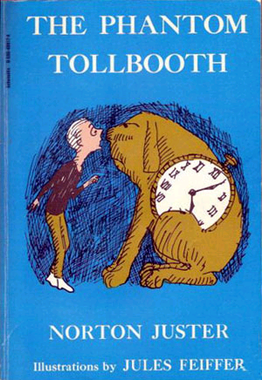
The Phantom Tollbooth

This is my third time reading Norton Juster's The Phantom Tollbooth. The first time I was in third grade and while I was interested in the illustrations, I found the book terribly boring. I abandoned it after reading about 50 pages. The first time I finished it I was in 5th grade, and I enjoyed it...so I read it again in 7th grade and loved it even more. Now, over a dozen years later, I returned to Juster's world a third time (from start to finish).

In this story, boring and apathetic Milo has no clue what he ever wants to do. As it seems, he always prefers to do that which he is not doing at the present moment. He is a dull boy until one day he finds a toy tollbooth in his room. He takes a toy car of his, passes by the tollbooth, and finds himself in another world.

Through the book you follow Milo's adventures, accompanied by Tock, a literal watchdog, and the Humbug, a rather curmudgeony insect who thinks he knows much more than he actually does. They lull in the Duldrums, visit the land of Dictionopolis - the land of words, jump to the Island of Conclusions, roam the Valley of Sound, explore the world of Digitopolis, and eventually brave the Demons of Ignorance before attempting to rescue Princess Rhyme and Princess Reason.

Juster creates a magical world that is as funny as it is clever. He intertwines some of the most clever wordplay to ever appear in a book, but under it all is a poingant message: the real world has more fun things in it than you'd ever have time to explore. There are plenty of other lessons and interesting insight, but to find them, you have to read the book yourself.

This is one of my favorite fiction books of all time. If I kept a top ten, it would have a permanent place there. As an adult, I believe I loved reading this even more than I did as a child. Few books parallell Juster's creativity and cleverness. Lewis Caroll's Alice books come to mind, but off the top of my head I can't think of many other books that combine rich fantasy worlds with clever real-world fun.

Rating: An absolute classic, on par with any other fiction book ever written (in my opinion)

93/100

Renewable Energy

Greenhaven Press's Opposing Viewpoints series never seems to fail. I've read maybe 7 or 8 of them (there's literally dozens of titles) and they've all been pretty much the same. Each one takes a controversial issue and presents articles that fall on one side of the issue or another. They are typically very well compiled and do a fair job at providing every angle to educate the reader on the complexities of the issue. This book takes on Renewable Energy.

This book looks at all kinds of renewable resources and alternative energy sources. It looks at issues like: "Is nuclear power renewable?" "Are renewable resources environmentally responsible?" "Are fuel cells a viable alternative to gasoline?" "Is hydrogen a legitimate future energy source?" and more.

This book, more so than some of the others I have read, really did an excellent job of detailing the complexities of renewable resources. At the end, I found myself a bit perplexed. After being introduced to both the hopes and the problems with each type of renewable/alternative energy sources, I found it difficult to take a strong stance on any of the sources! In the end, my conclusion was that maybe we need to do a little bit of everything. Obviously, reliance on any one - or two - or three - types of energy is a setup for failure.

Every energy source has its benefits and drawbacks. For example, Wind energy is 100% renewable but is also unreliable and obtrusive to the environment. Hydrogen is efficient and clean but dangerous to deal with and problematic in other ways. Fossil Fuels are incredibly efficient and inexpensive (for now), but have devestating effects on the earth, pollute like crazy, and are running out.

I always enjoy these books, but some articles are better than others. Some articles are very abridged, and a couple came from questionable sources. One mini-article was a letter to the editor!

All in all, this is an excellent choice for becoming knowledgeable about the complexities of renewable energy.

Rating: 4 out of 5 stars

(92/100)

Sunday, December 18, 2011

March

March, by Geraldine Brooks, won the Pulitzer Prize for fiction just a few years ago. I selected it on that basis, but was surprised to read on the jacket cover that it is essentially a fan fiction book. March draws its inspiration from Little Women. I was read aloud Little Women as a child, but I remember nothing from it. I was a bit skeptical going into this book.

As it turns out, my ignorance of Alcott's works had little impact on my experience throughout the book. Brooks follows the story of Mr. March, the absent father in Little Women, as he serves as chaplain to the Union army during the Civil War. Along the way he sees the ravages of war and sees the span of beliefs towards slavery and African-Americans. Along the way, he is shot but heroically rescued. The rest of the book comes mostly from his wife's point of view as he struggles to hold on to his life.

March is a well-researched historical fiction, probably more suitable to fans of Alcott's books, but still accessible to anyone. Brooks clearly possesses a gift for writing. I found the discussions surrounding slavery and the rights of African-Americans to be the most interesting part of the book. March meets people on all points on the spectrum on both Union and Confederate sides. He also befriends many African-Americans, serving as their pastor and teacher.

I mostly enjoyed this book. It still surprises me that this book earned a Pulitzer Prize - it doesn't seem to be of the same calibre as other Pulitzer winners I have read over the past few years. I would recommend this book to fans of Little Women and historical fiction.

Rating: 4 out of 5 stars

(91/100)

Saturday, December 17, 2011

Joy at Work

I've been working for one of Dennis Bakke's Imagine Schools for almost 3 years now, so I felt that it would be fitting that I finally get to reading Bakke's book, Joy at Work.

In this book, Bakke describes his outline for fostering a workplace that people enjoy working at. He claims that this model also allows for a successful and more productive workplace as well. At the core are four shared values: fairness, social responsibility, integrity, and fun. He also shares some ideas he has that achieve these goals. Central to his ideology is a playing field where management and "the workers" are placed on an almost-level playing field. Throughout the book, Bakke tells his story of being the CEO of AES and bits and pieces of his life story.

I had mixed feelings about this book. I work for one of his schools, but thanks to Pennsylvania law, I'm not actually an employee of Imagine Schools, I'm an employee of the ECS board of trustees. Bakke infuses a lot of Christian theology in the book (and includes a postscript that details how Christianity influenced his thinking and workplace philosophy), and that got me thinking as well. So here goes...my 3 reactions:

As a teacher in an Imagine School: Even though our school is not run (only financed) through Imagine Schools, we do try to incorporate these ideas in our school. I love working for ECS, and many other people do as well, but I would not say that there is an overall joy among staff members. One problem is that the shared values are oddly defined. In the schools he has boiled it down to three: justice, integrity, and fun. Justice is supposed to mean special treatment for everyone - some people can get more special treatment than others, too. Integrity is actually pretty close to the standard definition, so no issues there. Fun is the worst. Bakke defines fun as "decision-making," and that big decisions should be made by just one person. I disagree with that.

As a Christian: I greatly respect Bakke's faith. I admire his courage to be an outspoken Christian as a CEO. I think his attempts to instill Christian values in the workplace are noble. We certainly need more leaders like that. However, I believe that the only way you can have joy is to have joy in your heart. Joy comes from Christ, so without that real, true joy in your heart, there will be no joy at work. No program or shared values system is going to do the job that only Jesus can do. Bakke also makes some theological statements throughout the book that seem out of place and one of them right at the end was scripturally problematic, but I'm not here to tear apart a fellow Christian. I think his overall idea that people should embrace their Godly vocation - whatever it is - is a poignant message.

As a reader of all kinds of books: As a voracious reader, I don't know what to think. I know next to nothing about economics or running a business. A lot of Bakke's ideas sound pretty good, and it seems like his employees enjoyed this model. It was refreshing to read the simplicity and the apparent efficiency of his model. However, I think that it is important to note that his company was not particularly successful during his time as CEO. Ultimately, employee satisfaction is more important (I think) than profitability, but it's concerning that his model did not succeed from an economic standpoint.

The book itself...well...Bakke is not a writer. He's a businessman. The book lacks an overall focus. It's supposed to about joy at work, yet Bakke includes quite a lot of autobiographical information and at times reads like a memoir. He even includes a picture section in the middle with pictures from his life! He writes towards the beginning of the book that he had a bunch of ideas that he wanted to put into one book, and he wanted that book to be the only book he would ever need to write. That's what he did. What you get is a book that is part memoir, part business tome, part Christian inspiration: a mediocre mix with noble aims that fall short of their goals.

Rating: 2.5 out of 5 stars

90/100

Tuesday, December 13, 2011

Lord of the Flies

I really ought to have read this book a long time ago. William Golding's Lord of the Flies has earned quite a bit of noteriety, mostly because it always finds itself on the list of most frequently challenged or banned books. On the other hand, it's also considered to be a literary classic.

Lord of the Flies tells the story of a group of boys who, after being stranded on an island after a plane wreck, attempt to establish their own society. Before long their personalities really come out. Ralph is the leader who starts off strong but becomes increasingly timid and fearful, Jack is the bloodthirsty hunter, Simon is the adventurous one who displays just a bit too much curiosity, and Piggy is the annoying yet reasonable intellectual.

As one might expect, a society run by young boys is set up for failure. The first couple of days go well but before long the boys stop doing their part and tensions increase between the two leaders: Ralph and Jack. Meanwhile, they are haunted by a mystical "Beast" who is later revealed to be the Lord of the Flies. It's not long before all hell breaks loose.

Golding's purpose in writing this was to display the innate flaws of humankind - the natural sinful state. He does this with great flourish. The mood maintains its intensity throughout the entire book, even at the beginning when things are going relatively well. He uses a great deal of allegory, symbolism, and metaphors to accentuate this. The tale is grim, yes, but is still poingant and gripping.

As a side note, fans of Lost will notice a lot of similarities between the first season of the TV show and the story in this book. The influence is overwhelmingly evident - I wouldn't be surprised if this book was the source of inspiration that kick-started the development of the series. I'm not sure if it's a homage to the book or blatant plagarism, but the parallells are definitely there and not just a coincidence. The Lost writers give tribute to this when they have Sawyer reading Lord of the Flies in several episodes.

Should this book be banned in schools? Absolutely not. There's nothing overly objectionable...a few mild profanities (nothing you don't hear a million times on TV), a bit of violence (again, nothing you don't see a billion times on TV - even on some kids' shows), and an overall grim view of humanity (that's legit, but it's appropriate). I wouldn't recommend this book to anyone under the age of 12 or 13, not because of inappropriate material, but because of the richness of the writing. Most children under the age of 13 will miss some of the best stuff in the book because it will fly over their heads. It's probably too grim for kids under 10, but they would most likely struggle to read it anyhow. But banned...no.

This is a fascinating book for teens and up. Fans of Lost will enjoy finding the connections. This book has definitely earned its place as a classic. It was a compelling and thought-provoking read...the best kind!

Rating: CLASSIC!

(89/100)

Thursday, December 8, 2011

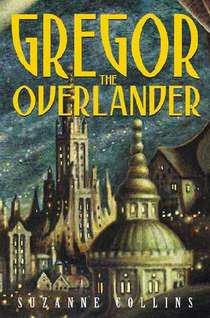
Gregor the Overlander

Plenty of authors have come forth with series to ride the Harry Potter wave of success or perhaps dethrone its reign as Young Adult fantasy king. Currently two series are on top: Twilight and The Hunger Games. Suzanne Collins is the author of The Hunger Games, but before she wrote that series she wrote Gregor the Overlander.


Collins's goal when writing Gregor and the books that follow it was to create a mythology that would resonate with kids who live in the city. Most fantasies revolve around pastoral themes with animals uncommon to urban environments. So instead of fantasy meadows filled with dragons, unicorns, and talking badgers, we have an underground world beneath New York City filled with talking cockroaches, giant bats, and vicious rats. Here a small society of humans have lived for many years, bonding with bats that they fly on, and fighting back rat attacks.

Gregor accidentally finds this world when his little sister Boots tries to climb into a dryer vent in the apartment complex they live in. Suddenly they are sucked in and taken to the Underland. There Gregor meets a band of giant talking cockroaches who lead him to the society of humans. There, he realizes that he is at the center of a major Underland prophecy. Gregor is an Overland "warrior" who will end the war against the rats. Astonished at this (in disbelief), Gregor seeks escape so he can return to his mother. However, when it is revealed that his long-lost father lives in Underland as a prisoner of the rats, Gregor finds that he has no choice but see if he is the mighty warrior of Underland prophecy.

For a children's fantasy, this book is pretty short. It has a pacing similar to the first two Harry Potter books. Like those books, it is a self-contained story with a promise of more to come. It also moves fairly quickly and never really digs deep under the surface (pun intended, after the fact). We meet an interesting cast of characters, get a taste of the Underworld mythology, run into a surprise or two and then the book ends. While it is pretty clever, it isn't nearly as rich as some of the other fantasy series out there for kids. That might make it more appealing, though, to a reluctant reader.

Parents and educators should be aware that there is a bit of violence in this book and several characters die. That said, it's much less violent (so I hear) than the Hunger Games books. It's age appropriate for 9 and up, but might be a bit much for sensitive children younger than that.

Overall, the premise was interesting, the mythology off to a good start, and a good mix of action and humor. That made up for some bland secondary characters and a lack of overall depth. It didn't suck me in...so I don't know if I'll read the rest of the series, but if I do, it should be fun. Perfect for kids 9 to 13.

Rating: 4 out of 5 stars

(88/100)

Tuesday, December 6, 2011

The End of Poverty

Jeffrey Sachs, author of The End of Poverty, is one smart guy. Unfortunately, my interest level  in economics is pretty low. I picked this book because I'm passionate about poverty, and I believe that attempting to end it is a necessary feat. That said, I understand so little about economics (what works/what doesn't) that I had a tough time with this book.

In this book Sachs attempts to make an argument for his plan to end global extreme poverty. There will always be "the poor" because there will always be those that have less than others. However, the world has the resources to end extreme poverty - a state in which people's daily needs are not being met - needs like clean water, food, clothing. Ideally this plan would also provide electricity, access to health care, and comprehensive education for children as well.

Sachs begins by sharing success stories from his personal life - helping Poland and Bolivia get on track. He also looks at India and China and their attempts to end extreme poverty internally. However, as he points out, in Poland it took forgiveness of debts and some foreign aid to help their economies move forward. Sachs then moves on to look at the probelms facing the poorest nations. He then unveils his plan. Basically, the largest part of the plan is to increase the power of the UN and its agencies and to have every wealthy nation give 0.7% of their GDP (or more) to fight poverty. He suggests a few other things as well to help the efficiency of things and to combat specific problems that require more than financial resources. He seems to like how doctors work to diagnose disorders. He provides a diagnostic tool that countries should use.

I felt persuaded by Sachs's arguments. I feel like they are reasonable and agree with him that the U.S. is not doing their part by giving BY FAR the smallest percentage of their GDP to foreign aid (at least out of rich nations). However, I am not the best resource for assessing economic ideas, given my general ignorance of the subject.

I think this is a good book, although I found it boring at times (due to interest, mostly), but again I'm not the best resource for this.

Rating: 3 out of 5 stars

(87/100)

Sunday, November 27, 2011

Right or Reconciled?

My latest book was written by none other than Bishop Joseph Garlington, the pastor of my church. Right or Reconciled? covers perhaps his most passionate topic: reconciliation. This reconciliation he calls for centers around racial reconciliation but also covers interpersonal relationships and other dividing grounds like gender, economic status, or political leanings. 

Garlington writes eloquently and with a fair measure of humor. Reading his writing is much like hearing him speak. In fact, I heard his voice in my head as I read. He includes countless scriptural references to back up his points. I've never heard someone speak as well as he does on this topic. Much of his study and thought can be found in these pages. I'm not sure that a better source exists when it comes to reconciliation, at least from a Christian perspective.

There's too much meat in this book to go into much depth here in a review, but I will say that you will be blessed by reading this book, no matter your background, race, age, gender, or political affiliation. That said, this book is only a shadow of his preaching. I probably didn't get a lot from reading this book because I've heard these points dozens of times during his preaching. His sermons are available here: http://www.livestream.com/covenantchurchofpittsburgh, and I highly recommend just about any of his messages. He's much funnier, poignant, and real in person. Lately I've begun to transform my life by living out reconciliation (a journey begun just a week or so before reading this book), and I'll leave you with a question that could change your life:

"Do you want to be right or do you want to be reconciled?"

Rating: 4 out of 5 stars (he's really better in person)

(86/100)

Prayers of a God Chaser

I'm done reading books as "devotionals" - I was reading books a chapter at a time, here and there, but while that worked great for A Purpose Driven Life and maybe one or two other books, I've found that splitting most Christian books up weakens their overall message and flow. Worse yet, if the book is a mediocre book I tend to lose any benefit I might get from it. I'll continue to read the Bible in short segments, but not other books.
Prayers of a God Chaser, by Tommy Tenney, is one of those mediocre dime-a-dozen Christian books that fill Christian bookstores everywhere. I actually purchased this quite a while ago but never got around to reading it until recently. I've not read his first book, The God Chasers, but I guess it must have been pretty popular because it spurned a number of spin-off books, like this one. It seems like Tenney is merely trying to cash in on the success of his first book in this series, because there's not as much substance as I would have hoped from a book about prayer. 

Tenney goes through 11 types of prayer that he identifies. Each one gets its own chapter in which he briefly describes it, gives both a Biblical and real-life example, and then describes how it can be put into practice. The types of prayer are:
-Desperation
-Repentance
-Hungry Heart
-Wisdom and Guidance
-Intercession
-Total Surrender
-Inspired Faith and Divine Declaration
-Struggle
-Adoration
-Emptying
-Commitment

This book could be powerful, but it's pretty thin, both spiritually and literally (150 pages with generous double spacing, whole pages devoted to chapter titles, etc.). Tenney always included enough to make me think "Oh yeah, I know that kind of prayer" but never really compels the reader to do anything but pray. I could see this benefiting a new Christian, but there really isn't much here for someone who's been praying and going to a spiritually thriving church for years.

Rating: 2 out of 5 stars

(85/100)

Friday, November 25, 2011

Ballparks: Yesterday and Today

Ballparks: Yesterday and Today is clearly meant to be a coffee-table book. It is very long to showcase photos of famous ballparks throughout history. The writers also included a history of ballparks and then go into each major-league baseball team and provide histories of their ballparks along with several photos of each. Coming in at 450 pages, you could spend many minutes perusing this book if you pick it up off someone's coffee table. If you attempt, as I did, to read this cover to cover...well, that would be a mistake.

There are two problems with this text. The first is that it was written not for the baseball fan, but for the architect. The writers focus more on the design and construction of the parks than on the historic moments that etch the ballparks in our minds. That, however, can be forgiven. The biggest problem lies in the editing - or the lack thereof. Errors pop up nearly every other page of text. This ranges from spelling errors to grammatical errors to just plain lazy stupid errors. There are several notes about where pictures are supposed to go that were left in the text. There are points where dates are wrong (like a park's opening date occurring after the last game was played) and other reviews I've read have even mentioned other factual errors. Also, they updated the book for the 2010 season and the copyright page says the book was published in 2007. On top of that, they never went in to update other things, so it says things like "the ballpark is scheduled to open for the start of the 2007 season." My favorite aside from the picture notes was when they talked about the best built ballparks from the "2th" century.

A few simple mistakes are excusable, but the amount of errors in this book prove that this was never meant to be anything except a coffee table book. There are some nice pictures of ballparks, so if you are really into the architectural design of ballparks, you may enjoy this book. Otherwise...save your time and money.

Rating: 1.5 out of 5 stars

(84/100)


Thursday, November 24, 2011

Vital Dust

Published 15 years ago, Christian De Duve's Vital Dust feels at times like it's at the cutting edge of latest research. Only brief moments display the age of this science book, which is a bit of a rare quality.

Duve traces the history of life and searches for meaning in all of it. Spanning from biochemistry (his field) to philosophy (not his field), Duve attemps to synthesize several fields of science and thought into an ultimate meaning of life.

He begins with a sweeping tale of the origins of life, beginning with theories on life arising from nonlife, moving to RNA and DNA origins, to unicellular life, to the diversity of multicellular organisms. Then, he discusses the nature of the human mind and the theories surrounding the existence and meaning of human consciousness. He then makes a stab at identifying the meaning of human life.

I read a lot of science non-fiction books and enjoy most of them. Very few, though, stick out from among the rest as "essentials" - books that I feel are essential reading for anyone interested in science. This book falls in that category, although with an asterisk. I have yet to read such a compelling narrative of the origins of life. Somehow Duve writes for both scientists and laymen alike. I must admit that there were moments where I felt lost, but the moments were brief and did not take away from my experience reading the book.

Duve's only fault occurs when he attempts to dabble in the field of philosophy. He  confesses several times that philosophy and psychology are fields where he has only passing knowledge about and dug deeper into in an attempt to further the scope of this book. His limits in these areas render the last 50 or so pages quite a bit weaker than the first 250.

I would recommend this book to anyone interested in science. If you don't consider evolution to be even a remote possibility of the emergence of life, then you probably won't appreciate this book. That would be a shame, though, because this book is beautiful.

Rating: 5 out of 5 stars

(83/100)

Sunday, November 20, 2011

Polarized America

Have you ever read a 200 page long research article? I just did. Polarized America: The Dance of Ideology and Unequal Riches, by Nolan McCarty, Keith Poole, and Howard Rosenthal, takes on the issue of determining the cause of polarized politics in America. Its structure and flow mimic that of a research article, and it reads that way as well. The authors take an enormous amount of research, statistically analyze it nearly to death, and deliver their results and suggestions for moving forward.

Their main hypothesis is that America becomes increasingly polarized as the gap between the rich and the poor widens. Plenty of factors play into this as well, like taxes, immigration levels (particularly among non-citizen immigrants), and major societal events like the Women's Suffrage movement and the Civil Rights movement. They prove their hypothesis through rigorous statistical analysis, shown through numerous charts and graphs. In the end, they bemoan the polarization of society and yearn for moderation once again. After all, government runs much more efficiently when polarization is limited. Blame falls to both sides of the table, but the authors chastise Republicans more for encouraging greater wealth inequality, which has exasperated the situation.

I enjoyed this book most of the time. The statistics clearly back up the hypothesis of the authors, and the charts and graphs are particularly interesting. I appreciated reading a book that dug deeper than surface-level. Most political books act as a forum for someone's ideas and theories with little research support. This book falls on the other end of the spectrum - just a couple of ideas with overwhelming research to back them up. The problem, though, as I read the book was the fact that I only possess the equivalent of one semester's worth of statistical knowledge. That helped me quite a bit, but this book dug into second semester statistics and beyond. I have to admit that I was lost and confused for about 25% of the book.

Despite the occasional confusion, I still found this book to be both refreshing and informative. However, given its statistical depth, I would warn potential readers that at least a semester's worth of statistics is a prerequisite to getting anything significant from this book or understanding a majority of it. I would heartily recommend this book to anyone with a statistics background who also has an interest in how the political system works.

Rating: 4.5 out of 5 stars

(82/100)

Wednesday, November 16, 2011

The Green Trap

I've been reading some pretty thick books lately, and I really felt as if I needed an easy read. I also needed a good read. The Green Trap, by Ben Bova, was an easy read but not a good read.

Bova reminds me a lot of Michael Chrichton. He has a background in science and uses science in some way in his books, some of which are science-fiction while others, like this one, are more action/adventure. In The Green Trap, part of the plot surrounds a plan to easily and efficiently create hydrogen for fuel.

The plot surrounds Paul Cochrane, who goes to visit his brother only to discover that he had been murdered. His brother had created the mechanism that created hydrogen, and it quickly appears as if there are many people that would like to get their hands on that and willing to go to extremes, like paying millions of dollars or killing. Cochrane meets Elena Sandoval, who at first is one of the people trying to get the info but then later becomes romantically involved with Cochrane and works with him to find the info so it doesn't get into the hands of the wrong people. These wrong people then pursue Cochrane and Sandoval with plenty of action and a few twists.

Before I critique the book, allow me to point out that this book has an average of two stars on Amazon.com. That almost never happens. Usually there is some contingent of people that love a book no matter how bad it is. As a result, most books fall between 3 stars and 4.5 stars. Two stars? Almost unheard of.

As far as the bad stuff is concerned, where do I start? The characters, first of all, are stereotyped and lifeless. The main character, Paul Cochrane, has absolutely no depth whatsoever. His "relationship" with Sandoval is so poorly written that it actually made me wince as I read the lovey-dovey stuff. This is an action/adventure "thriller," so plot tends to carry more weight than character...but the plot here fares no better than the characters. There's huge holes, events that happen for no reason whatsoever, and painful predictability. There's some mild excitement and one twist right at the end that I really enjoyed. But that's it. Just enough for me to give it some stars.

Reading this book made me yearn for the Left Behind books. I think that sums it up pretty well.

Rating: 1.5 out of 5 stars

Thursday, November 10, 2011

The Holy Vote

As I wind through the nonfiction stacks at the library, I slowly make my way through the Dewey Decimal System. I now have found myself right square in the middle of the politics section. Hoo boy. As you may very well know, I am an avid "soapboxer" who loves getting sucked into political debate, with the downside being that I often wind up getting frusturated with the state of American politics. As a result, I avoided the books that would get me really angry (written by Fox News hosts) and ones containing blatent lies and slander from both the right and the left, and wound up with basically only two choices from this bookshelf. I wound up with Ray Suarez's The Holy Vote.

As a political Christian, I always am intrigued by people who write about where faith and politics meet. Suarez reviews a number of hot-button faith-related issues and covers the feelings coming from both sides of the political spectrum. Each chapter focuses on one issue and usually zooms in on one or two case studies. Gay marriage, abortion, taxes, poverty, the role of Christianity in federal government, and religion/prayer in schools join all have their own chapter, as does the history of Christian politics and the racial divide in faith-based politics.

Suarez finds Christian arguments of a wide range for each issue, but devotes more of his time to the Religious Right's opinions, largely because that's what tends to dominate the debates. Suarez did a really nice job with that, although I'm already familiar with the different sides of these issues. I appreciated his careful inclusion of reasonable and intelligent quotes from religious leaders. He intentionally avoided most of the arguments of the most sensationalist media figures.

I was really bothered, though, by Suarez's insertion of his own opinions. This occurred typically only once per chapter, but felt out of place. Suarez identifies himself at the beginning of the book as a faithful and practicing Christian, but never identifies his political affiliation. It doesn't take a Sherlock Holmes to figure it out - Suarez is totally in the pockets of the Democrats. Unlike a Jim Wallis, who is definitely liberal yet consistently calls out errors he sees on both sides, Suarez seems to mold some kind of spiritual position on every stance the Democratic Party takes. While I happen to agree on many of these points, I also feel like it is important to put faith first, politics second. I didn't really get that vibe reading the book.

I'm not sure who to recommend this book to. If you are interested in faith and politics but haven't read a lot on the topic already, then this book is a good place to start.

Rating: 3.5 out of 5 stars

80/100

Tuesday, November 8, 2011

City of Ember

City of Ember by Jeanne Duprau is probably better known as a movie than as a book. I, for one, have not seen the movie, but read the book as a part of the vocabulary curriculum that I write for our grade level.

The book whisks the reader to an underground world, named the City of Ember. Here, people live their whole lives unaware of any other existence other than dark and dreary life with little hope. 12-year old Doon and Lina have just graduated into "adulthood" by receiving the job assignment they will live with for the rest of their lives. Driven by curiousity, the two kids quickly find themselves in the middle of an adventure they never could have anticipated. The supplies and resources required for the City of Ember are running low, but they just might have stumbled upon the solution.

Duprau writes with wonderful flourish. Working with middle school level writing, Duprau finds few limitations to the creation of an underground dystopia. Ember's society is well thought out, and Duprau carefully addresses all of the problems that a subterranean world would face. I'm sure you could scrutinize it heavily enough and find inaccuracies, but you'd have to dig really deep (yes, I said that on purpose). It's the kind of book that you want to keep on reading and when you get to the end you are left wanting more...in a good way. The ending, by the way, is magical.

I whole-heartedly recommend this book to children ages 10 and up! Adults would likely enjoy reading this book aloud to children possibly as young as 8 and up. There's a lot of great stuff here, although it doesn't quite cross over as an adult read in the same way that the Harry Potter or Chronicles of Narnia books do. Mind you, that will not affect my rating.

Rating: 5 out of 5 stars

(79/100)

Thursday, November 3, 2011

The Eastern Stars

For the past 40 years, Major League Baseball has benefitted from great talent hailing from the Dominican Republic. There are currently more professional baseball players from that country than any other country outside of the United States. This book, The Eastern Stars by Mark Kurlansky, looks at how baseball has transformed the town San Pedro de Macoris.

Kurlansky begins by going through a whirlwind tour of the history of the Dominican Republic. He also goes into the daily life of a typical resident of San Pedro de Macoris. Life in the Dominican Republic is not easy - much of it revolves around working in the sugar cane fields, other agriculture, fishing, tourism, or working for American factories. Inflation and insecurity has made matters worse. Most residents struggle to make ends meet, but they usually can at least afford to feed themselves, unlike their Haitian neighbors. There is one hope to escape the dismal outlook: baseball.

Kurlansky goes into detail about how baseball grew to be such an important staple of Dominican life. He also sketches out the path that baseball took, growing from small-scale hobby occasionally funded by the government, to large-scale baseball schools that groom top athletes into baseball stars. As a result, one small town (San Pedro de Macoris) has blossomed into a baseball factory (ever heard of Sammy Sosa or Robinson Cano?). Kurlansky also discusses some of the stuggles Dominican players have once they make it big.

I was really let down by this book. I was a bit foolish to think that it would be mostly about baseball - it was only about 60% baseball, 40% history - but I also feel like the book had some legitimate flaws. Kurlansky clearly is more comfortable writing about culture and history, of which he possesses a lot of knowledge, particularly about the Dominican Repulbic. Baseball...not so much. Kurlansky seems to understand the basics, but not to the level of a baseball fanatic, who I imagine make up a large portion of this book's audience, whether he wants that to be the case or not.

In the back section, Kurlansky gives short bios of all 79 professional baseball players from San Pedro de Macoris. They are probably the most boring writing that I've ever read. The bios consist of all of the transactions that each player had with exact dates of when they were signed, traded, or released. Then he writes a sentence or two about their statistics. NOBODY wants to read about transaction dates, not even these players' mothers. The statistics contained errors as well - like attributing 67 homers to a pitcher, when that pitcher actually gave up 67 homers. He also overexaggerates stats, like when he brags about a player hitting .500 for a year...but fails to mention that was over just 4 at-bats.

Books about baseball tend to attract baseball fans and few others. Kurlansky's lack of research about baseball is embarrasing for such an accomplished and highly regarded author.

Rating: 1.5 out of 5 stars - well written from a technical standpoint but the baseball errors and limited research are too pervasive to be acceptable.

(78/100)

Saturday, October 29, 2011

The Story of Stuff

While I don't celebrate it, Halloween is right around the corner, and my latest selection was appropriately scary, although perhaps not in a conventional sense.

Annie Leonard's The Story of Stuff: How Our Obsession With Stuff Is Trashing the Planet, Our Communities, and Our Health - And a Vision For Change pretty much summarizes the book with its title. Annie Leonard takes the reader on a journey through "stuff" ranging from food to electronics to packaging to clothing to whatever else you can think of. She looks at the 5 stages of "stuff:"

  • Extraction
    • This section looks at the process of gathering the raw resources needed for various items. Leonard particularly focuses in on our destruction of forests and the creation of homogenous forests of one tree species for wood and paper production. Single species forests do not support biodiversity of other living species the way a heterogenous forest does. She also shares her great concern for water usage. Weaved through this section and the next are human rights concerns. Many of our resources are gathered in questionable ways, and then are produced by people who don't make enough money to buy the items they are making - or even put food on their plates.
  • Production
    • Leonard focus on the process of producing and manufacturing our stuff. Her main concern is the use of natural resources and toxic chemicals in the production of far too many items. She goes on a long anti-PVC tangent, but also stresses the importance of regulating or banning other toxic substances as well.
  • Distribution
    • The obvious main focus here is the carbon footprint of our stuff. In America, half of our energy use is devoted to transportation, and a large chunk of that is transportation of goods. Buy local!
  • Consumption
    • This is the part where the average person steps into the chain. This is where we buy stuff, are manipulated to buy more, and are forced into replacing items on a frequent basis. In addition to going after big-box stores, Leonard also rails against planned obsolescence, the act of manufacturing items that will either go out of style within a year or two or will break down and stop working after a few years. Things are made cheaply so they will have to be replaced. Leonard also goes after advertisement and branding.
  • Disposal
    • Waste not, want not. First, we waste too much. The average American throws away an average of 4.6 pounds of trash per day!!! Almost all of this trash could be avoided in several ways. First, many items shouldn't be bought in the first place - why not lend what you need from a neighbor? Second, many items can be reused or repaired until they completely fall apart. Third, many items can be recycled or composted. Finally, if corporations would limit their waste in manufacturing and packaging, that would greatly reduce waste (they account for 76% of all waste in the U.S.). With all of this in place, the only things that would have to be specially "thrown out" would be toxic substances and infectious medical waste. Plain and simple (sort of).


I learned some interesting facts from this book, but overall there wasn't much new here for me. It's pretty much preaching to the choir. However, this collects some of the scariest real-life facts all in one place: toxic chemicals are everywhere, we're running out of natural resources, pollution is everywhere, humankind is spewing gasses into the atmosphere that are causing climate change, biodiversity is decreasing everywhere, the rainforest is disappearing, plastic never breaks down, waste is everywhere, the rich are getting rich while the poor are getting poorer to the point where millions of people are practically starving to death so that American CEOs can make millions of dollars and you and I can have our stuff for nice and cheap (and have lots of it). And that's only some of the scary "stuff"!!!!

I found this book both fascinating and frustrating. Fascinating because it was extremely well-written and highly researched. Frustrated because Leonard doesn't provide many solutions. She suggests many laws and regulations that should be passed, but when it comes down to personal action, she gives you very little to work with. Granted, it's not all that hard to glean the things we should be doing as individuals from these pages, but she essentially says that while individual action helps, it really takes larger-scale action to make a difference. That's kind of depressing - especially in America, where somehow super-conservatives have taken over American discourse to the inane level where over 40% of people doubt the fact that the earth is warming (let alone the fact that humans are making it worse, if not actively creating it), where corporations are defined as people, and where environmentalism is somehow seen as some nazi-socialist-communist scheme to destroy America.

Oh well...at the very least this book got me to consider a few things in my life that need to be changed. Every time I read a book like this or watch a documentary I change something about my life. I just wish that Leonard could have at least lied to me and told me that my day-to-day actions can make a big impact. Then, at the very least, I'd feel a little less defeated.

Rating: 4 out of 5 stars

77/100

Thursday, October 27, 2011

Darkness of the Light

As I read Darkness of the Light, by Peter David, I also happened to be reading through Peter David's first run on the comic book X-Factor. The comic is clever and funny, frequently poking fun at the genre while simultaneously weaving interesting plot lines. David has fantastic writing skills and I very much looked forward to reading this book.

Darkness of the Light is the first of an intended series of books taking place in a post-Apocalyptic world. Most humans are dead, and those that survive are enslaved by one of 12 races. The 12 races consist of mythical creature types, with different names. They fight amongst themselves for control of what is left of Earth, but time is running out, as the energy resources for the planet are running low. A group of misfit characters of different races band together along with a renegade human to try to find the "orb" that will be a certain source of power in a very uncertain time.

It took me a very long time to read this book - MUCH longer than I expected. I hope I don't lose momentum! I think it took me so long because while the book is 400 pages long, the font is quite small, and the plot is very complicated. The first 250-300 pages read much like some of the Russian classics, where a million characters with unusual (to Americans) names are introduced and all of the elements are laid down for the rest of the book. Unfortunately, the book was almost over by the time I got all of the characters, races, and political systems straight. The book has 12 races, plus humans, and while some races are more featured than others, it was really hard to keep everything straight. Especially difficult was managing all of the political relationships between the races.

David also sticks pretty strictly to the Fantasy genre. He doesn't really have anything particularly new to bring to the table and sticks to the overused tricks of the trade. He does so in a better fashion than most, though, and that makes it at least an interesting book. It still falls mostly in the category of formulaic fantasy.

It's a shame. David is an excellent writer but engages in way too many projects at the same time. He spits out at least 24 comics, 3 books, and several television scripts every year. If he put all of his time and effort into one or two projects per year, he'd create masterworks. Instead, in the name of making a quick and easy buck (actually, a lot of quick and easy bucks), David sticks to being just "pretty good." This book fits that mold perfectly. Could be great, but settles for just "pretty good."

Rating: 3/5 stars

(76/100)...still ahead of schedule despite the book taking a while to read)

Wednesday, October 19, 2011

Family

I always know what to expect with books from Greenhaven Press's Opposing Viewpoints series. This is the second book from that series that I've read for this challenge, and at least the fourth or fifth that I've read overall. You always get literally opposing articles on controversial topics, and it always paints an excellent picture of both sides of a debate. You won't get thorough articles, for the most part, and you're on your own for deciding whose argument is better.

Family is no different. The editors selected articles debating many topics, such as:
- Has the traditional family changed in structure?
- Should homosexuals be allowed to marry?
- Is adoption a moral option for the majority of cases?
- Does divorce have long-lasting impact on children?
- Should both parents in a family work?

As always, good overview articles were chosen to represent the two sides of the debate. There were a couple of duds, but to balance that out, there were a couple of really excellent research articles. As usual, I appreciated hearing the different views, although I didn't really learn a whole lot, except about adoption. I was really surprised to hear that a lot of adoption agencies are really just for-lots-of-profit child markets...both viewpoints on the adoption issue recommended a lot of caution with adoption.

If you want to see competently-written, smartly compiled articles on a few family-related issues, this is a good place to start.

Rating: 3 out of 5 stars

(75/100)...3/4 of the way!!!

Sunday, October 16, 2011

Mrs. Dalloway

The prospect of reading my first book by highly-regarded classic writer Virginia Woolf excited me. By the time I had reached page 10, I lost that excitement.

Mrs. Dalloway recounts a day in the life of Clarissa Dalloway. We hear much of her story through flashbacks as the day goes on. Throughout the day, Clarissa plans for and hosts a dinner party. In between the events of the book the reader gets to see inside Clarissa's mind through stream of consciousness narrative. We also get to peer inside the mind of a few other characters, like Septimus Warren Smith, a man with great mental illness who is supposed to be a mirror of Clarissa, Peter Walsh, Clarissa's former lover, and bits and pieces of others.

Clarissa is unhappy with her life, for the most part. She married Richard Dalloway instead of her long-time lover Peter Walsh because Richard was more reliable and therefore better marriage material. However, he's not around much and their marriage is fairly loveless, though still intact. Clarissa still has feelings for Peter (who is married but seeking divorce to pursue a married woman) and for a woman from her college days, Sally Seton. In the end, Clarissa holds the dinner party and it's more or less a success. Most of the characters we meet or are mentioned show up to the party, and there's some mild surprises in store throughout the party.

Woolf wrote Mrs. Dalloway almost like a 180-page poem. It takes a great deal of effort to read the book, and while it's delicately written, it's also tremendously boring and depressing. Clarissa suffers from mild depression and swims around in hopelessness. Woolf apparently put a lot of herself in these pages, and it isn't pretty. Woolf eventually committed suicide - a prospect that Clarissa finds intriguing. There's also a very dismal view of marriage and relationships that exists in these pages. Almost every married couple is close to divorce, and characters pursue one another as if marriage was only a trifle. Clarissa/Woolf also has some very condescending things to say about Christians and God. There's also great emphasis placed on societal position, as if being rich makes you a better person than if you are poor.

I hated this book. I read for basically three reasons: to be enriched (through knowledge), enlightened, or entertained. This book fit none of those categories. I didn't learn anything, found the book to be offensive, and it was absurdly boring. Was it well-crafted? Absolutely. Could I recommend this book to anyone? Not really.

Rating: How can I rate a book so well written in form yet so lacking in anything I can appreciate?

74/100

Wednesday, October 12, 2011

Field Notes from a Catastrophe

Elizabeth Kolbert compiled a series of New Yorker articles together with new material and published Field Notes from a Catastrophe, a work that intends to join the climate change conversation. I'm growing very weary of this conversation, because honestly, it shouldn't be a conversation. If you read this book, as with other related books, you'll understand why.

The climate change conversation currently exists over whether or not climate change is manmade. This is a waste of time, and the furthering of the conversation is necessitated by individuals who insist upon wallowing in ignorance. Let me sum it up in a sentence: Some climate change can occur by natural events, but our current changing climate stems largely from humankind's actions - primarily through the amount of carbon dioxide we send into the atmosphere. It's this precise fact that Kolbert sets out to prove. Listen, there's so much evidence for humans creating climate change that the conversation that we should be having is over how we can turn this around. There could possibly be a conversation over the extent to which humans are impacting the climate - whether its moderate or extreme - but our time is better spent figuring out solutions.

Kolbert walks us through a number of different case studies and historical inquiries surrounding climate change. Each chapter reads like a magazine article, which is because many of these chapters began in that form. They are fairly in-depth, somewhat engaging, and certainly filled with interesting information. As a whole, it's not as cohesive and complete as some books (such as The Inconvenient Truth, which I read for this challenge), but it's still a worthy entry into the genre. Kolbert lays out the facts that prove that humans are behind the current changes in our climate. I don't know that it's enough to convince the stubbornly ignorant, but it's a worthwhile read.

If you have your doubts about human impact on climate change, read this book. It's not as much of an emotional appeal as some of the more popular books on climate change and sticks mostly to the raw facts. If you leave this book unconvinced, then I'm sorry, but you are ignoring the facts. The scientific consensus on this issue is almost unparallelled, like that of the earth being a spherical orb that revolves around the sun. Except to deny the fact outlined in this book is potentially harmful to the water you drink, the air you breathe, the nature in your back yard, and human survival itself.

Rating: 4 out of 5 stars

(73/100)

The Wright 3

I've now finished my second book for school, The Wright 3, by Blue Balliett. Honestly, I can say that I don't know what to think about this book. It lies somewhere in between brilliance and idiocy. I'll explain why.

The Wright 3 follows three kids: Tommy, Petra, and Calder. They were all a part of Balliett's first book, Chasing Vermeer. Like that book, these 6th graders find themselves in the middle of a mystery that is soaked in art, geometry, coincidences, and cryptic messages. In this case, Frank Lloyd Wright's Robie House is about to be cut into sections for display in museums. However, as this is close to happening, some strange things happen around the building. The three friends will try to solve the mystery, but can only do so if they all can get along.

This book is very rich. Starring sixth graders, it was surprising to find that this book featured an 8th grade level vocabulary. It also made allusions to H.G. Wells's The Invisible Man, and Alfred Hitchcock's movie Rear Window. If that wasn't enough, the book goes on and on about pentominoes - geometric puzzle pieces - and a written code that takes an annoying amount of time to decode yet never provides you with anything worth reading. I enjoyed some of the richness, but if your target audience is 5th/6th grade, the vocabulary is going to push away many kids, and those willing to stick around almost certainly haven't read The Invisible Man or seen Rear Window or played with pentominoes. Granted, those aren't prerequisites (Balliett gives summaries and explains pentominoes), but the book certainly carries a deeper richness if you are familiar with those elements.

The Wright 3 has a few fundamental flaws. First, it's not a very good mystery. The plot is scattered, and the clues are mostly in the form of coincidences, pentomino work, and strange supernatural-ish events that in the end have nothing really to do with the culprits, but with the architectural features of the building. In the end, it winds up being more of an adventure than a true mystery, because there aren't really any suspects except one super-obvious suspect. For all of its richness, it's really a poor mystery. The second flaw is that this book has (almost) no audience. Typically, children and adolescents like to read books featuring characters that are their age or older, but rarely younger. That would pin this audience at 4th-6th grades, maaaaaybe 7th grade. The vocabulary is a better fit, however, for 8th grade and up. Those older students, though, still might not get the connections to The Invisible Man and Rear Window. Also, with the book featuring a mediocre mystery plot, it might not hold the interest or the appreciation of an older crowd.

So I don't really know how to rate this book. I don't really know who to recommend it to, aside from advanced 4th-6th grade readers. It's got some really good stuff and some not-so-good stuff.

Rating: 2.5 out of 5 stars

72/100

Sunday, October 9, 2011

Practicing the Presence of People

Mike Mason used to be severely introverted. However, God gave him an epiphany and Mason learned that he needed to really, truly love people. Mason's introversion had spread beyond preference and into fear and anxiety, which are not of God. As a result, while he still enjoys his time to himself, Mason no longer has fear and has had his view of love transformed. This book, Practicing the Presence of People, explains the lessons he learned in a practical and theological way.

Mason has split his book into 5 sections: People (loving others), Self (loving yourself as well), Presence (how God fits in), Practice (how-to), and Friendship (kind of a summary). Each section has several mini-chapters that deal with a smaller issue, provide examples, or tell a story.  There are 65 chapters in addition to chapter introductions, a prologue, and an epilogue. Over the span of 270 pages, this allots less than 4 pages per segment. It's a quick read, and could be done as a devotional.

Mason's basic message is to love others. That's a message that never grows old. Christians and non-Christians alike have attempted to spread that message through the years, but we still haven't quite gotten there yet. Mason has a lot of insight into this topic as he relates his journey through the concept of love. He uncovers many different levels and aspects of loving others and provides some practical ways to put this into practice.

It's an easy uplifting read with some definite takeaways. It probably could have been done more succinctly - there is some redundancy - but that's probably my only complaint. It's certainly worth a read, and it's a manageable read that could change the way you interact with others.

Rating: 3.5 out of 5 stars

(71/100 books...I'm starting to think that maybe I'll be done by the end of this calendar year, which would be 2 months ahead of schedule!)

Saturday, October 8, 2011

Physics of the Future

Man, I was SO excited to read this book. I am a big fan of quantum physicist Michio Kaku, having read a few of his other books. This is his latest (and maybe the first book I've read this year with a 2011 publication), and promised to peer into the future. Funny enough, Kaku references two books that I read previously for this challenge in his introduction - Paris in the Twentieth Century and Neuromancer. I figured that was a good sign.

To write this book, Kaku used both the depths of his great knowledge of the science realm as well as interviews and research from other scientists and innovators. He looks at several main categories and how they will play out in the near future (by 2030), the middle of the century (2030-2070), and the end of the century (2070-2100). His categories are:
- Computers/Internet
- Artificial Intelligence/Robots
- Medicine
- Nanotechnology
- Energy
- Space Travel
- Wealth/Government
- Humanity/Civilization

He takes an extremely in-depth look into each category, explaining what prototypes are in work today, as well as likely paths for each area. He explains the science behind all of the future technology, and also points out potential limitations. Some of his predictions include computer chips (with internet access)  in just about everything from clothes to your walls, internet contacts, handheld medical diagnoses scanners, and quantum computers that use atoms as their base rather than digits.

Physics of the Future reads a lot like the magazine Popular Science: futuristic science and technology explained for anyone with an interest in science or technology. The title is a bit of a misnomer. There's only a minimal amount of actual physics in the book. As a fan of Kaku's previous material, I found this to be disappointing. I skimmed over most of the physics parts because they were fairly basic quantum physics, stuff I've read a hundred times. Physics of the Future, apparently, is Kaku's attempt to appeal to a broader base. However, by referencing physics in his title, he can still get readers of his other books to read this one.

Kaku also extends his reach a bit beyond science, covering economics and politics in shorter sections towards the end. He probably should have stayed away from this arena, as his predictions are very broad and unspecific. These sections were the weakest and I could tell that he was out of his comfort zone. I think they were included only to create an overarching picture of the future in 90 years.

Physics of the Future may have a misleading title, but it was still an interesting book. The future technology Kaku describes is fascinating. At times, it feels like you are reading a science fiction book, but in actuality there are at least prototypes for almost everything he predicts being widely available by 2070.  I enjoyed reading this book, but it's clearly Kaku's weakest book for two main reasons:
1.) Kaku strays away from his area of expertise, physics, to write something with wider appeal. At times it reads like a Discover Channel or PBS special rather than his usual scholarly work. There's a purpose for both, but he shouldn't have billed it as being a physics book.
2.) Kaku strays away from science in some areas. This creates a lot of openings for his personal opinions, rather than research and scientific theory. He inserts (perhaps subconsciously) his political opinions, most markedly by referring to anything in the very near future as happening in "Barack Obama's second term." He does this several times, which seems to indicate that he can't even imagine the ramifications of a Republican being in the office of the Presidency. I tend to agree with Kaku, especially because of the threat of human-created global warming. Kaku gives a short but complete explanation of how it's literally impossible to disagree with the phenomenon of global warming, and it's extremely ignorant to disagree that humans are the primary cause of it. There are other areas where Kaku's opinions come out, but not quite in as biased of a fashion.
3.) Kaku inserts more of his religious beliefs (or lack thereof) in this book. He disregards pretty much any notion of God, seeing science as our way of achieving some sort of god-hood. That notion was only occasionally present, but when it was, it came off as being a bit arrogant and ignorant. Kaku's nowhere near as bad as Richard Dawkins, but this is the most overt Kaku has been in any of the books I have read.

While this may be Kaku's weakest book, it's probably the one I would recommend to start with for anyone unfamiliar with his work. It's fairly easy to read (compared to his other work), and not too rich in its science. If you like Popular Science or science documentaries like Nova or stuff from the Discovery Channel, then you'll probably enjoy this book as well.

Rating: 4 out of 5 stars

book 70 of 100...still very much ahead of schedule!

Tuesday, October 4, 2011

God's Abundant Grace

This was another short-ish devotional. Dwight L. Moody earned his fame in the late 1800s from his establishment of the Chicago Bible Institute, now known as the Moody Bible Institute, and from his work as an Evangelist and missionary. His writing...well, not so much.

God's Abundant Grace is a typical "popcorn" Christian book. It's easy to read, somewhat spiritually encouraging, but not terribly profound. Moody spends most of his book unfolding what the gift of grace really means. He does well with this. The last 30 or so pages of the book go through a series of interviews with Reverend Marcus Rainsford that cover the basics of Christianity.

The front jacket says that this book is the updated (1998) version. I suspect this means that they took the liberty to update his language. I've seen that before with older Christian writing. Basically, a group of people rewrites and waters down the author's original writing. While that does make the book more accessible, it also tends to dumb down the subject matter in the process. There's value in rich language; I hope nobody ever does this with C.S. Lewis's books.

This book is fine, but it's nothing revolutionary or transforming. If you come across this in a used book sale for cheap, or on the discount rack in your local Christian store, you might find it worth the few hours it will take you to read.

Rating: a hesitant 3 out of 5 stars (assuming that it lost a bit with the update)

(69/100)

Shadows of Blue and Gray

One of my all-time favorite short stories is "An Occurrence at Owl Creek Bridge." I've read it at least 3 times and seen both the Alfred Hitchcock Presents and the Twilight Zone episodes that take on this short story. Much to my delight, I got to read this story again, because it was contained in a collection of short works by Ambrose Bierce.

Shadows of Blue and Gray: The Civil War Writings of Ambrose Bierce contains the entirety of Bierce's works about the Civil War. Bierce fought throughout the entire Civil War, witnessing many tragedies, obviously forever scarring his life. Most of this collection contains his fictional short stories, though there are several memoir selections as well.

Bierce is a masterful storyteller. He writes richly yet clearly and enjoys shocking or surprising the reader. You can tell that the Civil War had a profound affect on him, as all of the stories in the collection are enveloped in a dark cloud of misery and suffering. A character dies in nearly every story, in addition to the piles of dead and rotting bodies often witnessed as well. There's also some subtle supernatural feel to the stories as well, mostly manifested in visions of dead people and dead main characters witnessing the events of the world without realizing they are dead.

The Civil War was rough - if you add up the American deaths of EVERY war besides the Civil War, they number less than the American deaths that occurred during the Civil War. The grim darkness of Bierce's stories would be depressing in virtually any other setting and would cause me to question the author's sanity. In this case, Bierce merely attempts to paint a realistic picture of the Civil War. It would have been nice, though, if there were at least one or two pleasant stories.

Bierce's memoir pieces are interesting to read, but lack the intensity of his stories. He doesn't seem nearly as passionate about real events as he is fiction.

If you enjoy short stories and can handle a almost 300 pages' worth of dark stories, you'll love this book. If you are a Civil War buff, I would also highly recommend this book!

Rating: 4 out of 5 stars (I feel like Bierce could have thrown in a bit more variety to the tone of his stories)

68/100...still way ahead!

Saturday, October 1, 2011

Bobos in Paradise

(content deleted)


Rating: 2 out of 5 stars

67/100 books - over 2/3 of the way!!!

Thursday, September 29, 2011

The Gashouse Gang

I have a passion for baseball that stretches all the way back to 1986, when I turned 2 years old and wanted to go to a baseball game for my birthday. I learned how to read when I was 4 because my father was sick of reading the baseball scores to me. By the time I was 6, I could tell you most of the big players on all of the sports teams. By the age of 10, I had begun to memorize yearly stats of certain players. To this day, baseball remains one of my favorite passions. For some reason, though, I don't read a lot of baseball books.

My grandmother purchased me the book The Gashouse Gang, by John Heidenry because she knows I like baseball and reading. I wasn't so sure that I would enjoy it. It chronicles the story of the "Gashouse Gang," the nickname for the 1934 St. Louis Cardinals team that would go on to win the World Series. The Cardinals are a division rival of the Houston Astros, my co-favorite team (along with the Philadelphia Phillies), so I naturally don't have the best feelings towards them.

Heindenry spins a marvelous tale throughout these pages. He weaves biographical information, wacky tales, and historical details about the 1934 season into a seamless narrative. The story revolves around the amusing Dizzy Dean, the ace of the Cardinals' pitching staff. He is a character of Tall Tale status, an American legend from the early days of live-ball era baseball. His wild personality rivals that of modern head cases like Nyjer Morgan and Manny Ramirez. The reader also gets a taste of the other members of this motley crew, like strong-headed Joe Medwick, player-manager extraordinaire Frankie Frisch, eccentric Pepper Martin, future HOF coach Leo Durocher, and the frugal-to-a-fault yet saintly genius general manager Branch Rickey.

I thoroughly enjoyed this book, which is as much a passionate anthem to the glory days of old-time baseball as it is to this particular Cardinals team. Baseball then was a different sport - a bit rougher, more down-to-earth, and full of characters. Back then, baseball was truly America's national pastime.

Heindenry is at his best in the book when he weaves together stories of the players and the St. Louis team with the day-to-day baseball stuff. Towards the end he focuses on the historical run of the Cardinals at the end of the season and then the playoff run. He eschews most of the stories and sticks to a play-by-play analysis of the games. Things get a bit slow then, especially since I bought into this book more as a tale of old-time baseball than as a tale of this particular team's season.

If you enjoy baseball, then this is a worthwhile read. If you don't enjoy baseball...well, it's still a good book, but the last third of the book may lose you.

Rating: 4 out of 5 stars

66/100 books...about 2/3 of the way!

Saturday, September 24, 2011

Panicology

I'm a bit of a worrier, so when I found the book Panicology, by Hugh Aldersey-Williams and Simon Briscoe, I thought that might be a great way to perhaps ease some worries. Briscoe and Aldersey-Williams are statisticians and look at various  media and societal scares from the past 10 years or so and analyze them to see what is and what isn't worth your angst.

They picked some very good and obvious things to look into: terrorist threats, several aspects of global warming, the autism-vaccine link, and overpopulation, just to name a few things. They also picked some very strange issues: the death of cinema, alien abduction, dangerous art (in a literal sense - odd-shaped large sculptures, buildings created as "art"), and the decreasing frequency at which people are having sex.

The authors explore each issue with adequate depth. Both sides of the issue are presented followed by the authors' analysis of the stats and of the validity of different arguments. Each issue concludes with a rating scale that shows three things (which are never really explained - it seems like they are were a last-minute addition): Panic (the level society/media panics over the issue), Risk (the actual risk the issue poses), and Personal Empowerment (the amount that we can do to decrease panic or deal with the issue).

In the end I found myself disappointed. I'm a media skeptic, so when big scares come around, I do my reading. The statisticians do that work for you. For the most part, I was aware of the information they were sharing. There were a few issues where it was nice to see my conclusions verified. It made me smile to see them absolutely blast proponents of the autism-vaccine link, which was perhaps their harshest condemnation of panic-pushers, and it was affirming (though discomforting) for them to take on global warming issues one by one and show that for nearly every issue, we aren't panicking enough.

Overall, though, this book falls into an odd niche. The type of people that would read this book are likely to be either already informed on these issues or bored by the depth of the analysis. It also starts off slow by tackling social issues that people may be concerned about but not panicky about. Most people would look for something with more depth on a smaller amount of issues, or something with less depth but more breadth. I actually was hoping for the latter, perhaps short one or two-page fact sheets or mini-analysis concerning the odds of things happening like getting hit by lightning (not covered), getting cancer from cell phones (sort of covered), getting autism from vaccine (covered), or losing control of your vehicle in ice/snow (not covered).

Anyhow, it's not a bad book, but I'm not quite sure who I would actually recommend this book to.

Rating: 3 out of 5 stars

65/100, about 8 books ahead of schedule

Sunday, September 18, 2011

Paris in the Twentieth Century

In 1863, Jules Verne attempted to have Paris in the Twentieth Century published. Verne had not reached the level of popularity that he would in a couple of years. This was a very early work, and publishers were skeptical of some of his predictions, claiming the book unfit to be published. In retrospect, that's pretty funny.

This book is fairly short, especially compared to some of Verne's most well known works. Two threads follow through the book. The first is merely Verne's exposition of Paris's history from 1860 to 1960, highlighting the technological advances. The second is what makes up the formal plot of the book.

The thin plot follows Michel, a 16-year-old who has just graduated from an academy with a degree in the arts. Unfortunately, art has all but died by 1960, and Michel can find no related work. His uncle signs him up to work at a bank, where Michel meets a pair of friends that share his interest in art. The three friends explore various art mediums, along with an old professor of Michel's. Along the way, Michel falls in love with his professor's daughter. However, after an unfortunate accident at the bank, he finds himself unemployed. Will Michel find occupational salvation in art or will he find himself lost in this dismal land?

Verne's visions of a futuristic Paris may not have impressed publishers from the 1860s, but looking at it today is overwhelming. Verne predicted many things that were not at all in existence in 1860. These inventions include (but are not limited to):
 - Gasoline-powered automobiles
 - Skyscrapers
 - Computers (although they were primarily calculators)
 - Fax machines
 - a rudimentary form of the internet
 - High-speed trains
 - Electric chairs
 - widespread electricity (mostly for lighting)
 - Electric organs (and other electric instruments)
 - Digital (he calls it mechanical) books and music
 - The Panama Canal
 - The Eiffel Tower (not by name, but described it fairly accurately over 20 years before it was built)
 - The Industrial Revolution

Amazing! Some of these things would be in existence by 1960, some later, and he did come up with a couple ideas that never came to be, such as the piano-table-bed combo. That was just plain silly, but to Parisians in 1860, many of those mentioned inventions were far sillier. Verne was also off in predicting that art would be dead and the world would be at peace by 1960. He also seemed to miss the concept of home heating, despite all of the other predictions. Even so, this book is stunningly accurate considering that it was written 100 years before.

I enjoyed the book, mostly for the inventions and Verne's ideas. The plot was thin but adequate. Some books go unpublished for good reason, but Paris in the Twentieth Century does not fit that bill. While far from Verne's strongest (and most popular) works, this book still holds up pretty well.

Rating: 4 out of 5 stars

64/100