The First Man was the final (unfinished) manuscript worked on by the great Albert Camus before he died tragically in a car crash. His daughter released it and noted in the introduction that Camus' wife did not want it published because it might mar his reputation. His daughter, however, argues that the autobiographical slant of this novel merits its publication.
Turns out, they were both right.
Camus' wife was correct in thinking that publishing an unfinished first draft of a novel is not the best idea. It's not, if you were wondering. Mind you, few errors remain in the text, but there are portions where it is noted that Camus crossed out a paragraph, and Camus' notes are spread throughout footnotes and two sections of the appendix (which I did not read because they would be impossible to follow). It felt exactly like reading a well-written draft, which was interesting but unfulfilling.
On the flip side, Camus' daughter was correct in thinking that this work was worth publishing. However, it undoubtedly would be more valuable if it were published along with other unpublished works - letters, drafts for other works, etc. Then it could be marketed for the avid Camus reader, the intended audience for a work like this. While it's not a proper autobiography, Camus does fashion the main character after himself and his life experiences. This insight into his early life sheds a lot of light onto Camus and his development into a writer.
The book itself follows Jaques, who really is Camus himself. He begins on a quest to find out more about his father, who died at 29 - in Albert's early years. This spurns him into a recollection of his childhood days, thus beginning his autobiography. The First Man begins with his birth and ends with his later teenage years, studying at a French academy. Throughout the reader visits Jaques' family home, immersed in colorful family members, including a vulgar uncle, a feeble older brother, a deaf and mute mother, and an overbearing grandmother. The reader also travels through Jaques' educational experiences in Algeria and France. In each location Jaques travels to Camus paints a lifelike portrait of the streets, the people, and the environment.
Overall, this is a great start to a great novel. In its unfinished state, I would only recommend this book to Camus enthusiasts who have read his published works. I do not fall in that category, so I did not fully appreciate this work. I bought it for cheap from a library book sale, but had I read the inner jacket and realized that it was unfinished and in draft form, I would not have purchased it.
Rating: 3 out of 5 stars (on its way to 4 or 5 if it had been finished and polished)
30 books, 122 days...at this rate I'll read 89 books
Thursday, June 30, 2011
Wednesday, June 29, 2011
Armageddon
Armageddon is the 11th and next-to-last book of the Left Behind series by Jerry Jenkins and Tim LaHaye. The characters are in the last days and the enemy is ready to go to war against the Christians and other rebels.
This book could have been epic: the grand climax (almost) of a battle between good and evil. Instead, it's just okay. More than half of the book deals with the imprisonment and torture of one of the main characters and the corresponding rescue effort. The rest gets into the war - Carpathia summons the full strength of the Global Community to eradicate those who oppose him: mostly Christians but several Jews and a few other rebels. Time is running out!
What makes this book better than the past few is the fact that the authors take risks in this book. Multiple characters die, including one major character before the last chapter (in which the war culminates). There's actually a bit of excitement built up surrounding the war, and for the first time in the series since book 3 or 4, I'm actually a little bit anxious to see what happens in the next and final book. I know generally what will happen but not exactly how.
Still, though, the book is fairly poorly written. The characters still yearn way too much for violence and shooting guns, not to mention they still aren't well developed despite 12 books and about 4000 pages of writing.
Rating: 2.5 out of 5 stars (comes close to capturing the excitement of the first few books)
29 books, 121 days...at this rate I'll read 87 books
Tuesday, June 28, 2011
What the Dog Saw
What the Dog Saw: And Other Adventures is the latest book by Malcolm Gladwell, famous for The Tipping Point and other excellent non-fiction books that look into how people think and the way things work in our society. What the Dog Saw, however, contains not one fluid narrative but a collection of articles from The New Yorker, Gladwell's other job.
Gladwell writes in a way few authors can. He has the ability to make the most mundane things interesting and also possesses an uncanny ability to take readers for a ride in the mind and inner workings of individuals and societal systems. I greatly enjoy his writing, and his first three books are all "classics" in my mind. What this gets me to, then, is my thoughts on the book.
The articles in What the Dog Saw were selected by Gladwell as examples of his finest work. Many of the articles fascinated me: an article on how to solve homelessness, a study of the effectiveness of generalizations, and an article on the mechanics behind human responses to stress. Several are rather dull: the history of hair dye, the follies of the creator of the birth control pill, and the reasons why one brand of ketchup dominates the market.
It's a great book, but it feels weird as you jump from article to article. Of Gladwell's four books, this is clearly the weakest. The articles are quite good, but you can read most (perhaps all?) on his website, where you have the ability to pick and choose what you want to read. Admittedly, though, given the number of articles and their length (not to mention reading it all on a computer screen), the book format presents a preferable option. Still, Gladwell writes at his best when he can completely immerse himself in an idea. All of the articles present opportunities for Gladwell to look into one aspect of an idea, but the book format typically suits him better.
Rating: 4 out of 5 stars (it's not really a "book" per se, but it's still really good)
28 books, 118 days...at this rate I'll read 86 books
Gladwell writes in a way few authors can. He has the ability to make the most mundane things interesting and also possesses an uncanny ability to take readers for a ride in the mind and inner workings of individuals and societal systems. I greatly enjoy his writing, and his first three books are all "classics" in my mind. What this gets me to, then, is my thoughts on the book.
The articles in What the Dog Saw were selected by Gladwell as examples of his finest work. Many of the articles fascinated me: an article on how to solve homelessness, a study of the effectiveness of generalizations, and an article on the mechanics behind human responses to stress. Several are rather dull: the history of hair dye, the follies of the creator of the birth control pill, and the reasons why one brand of ketchup dominates the market.
It's a great book, but it feels weird as you jump from article to article. Of Gladwell's four books, this is clearly the weakest. The articles are quite good, but you can read most (perhaps all?) on his website, where you have the ability to pick and choose what you want to read. Admittedly, though, given the number of articles and their length (not to mention reading it all on a computer screen), the book format presents a preferable option. Still, Gladwell writes at his best when he can completely immerse himself in an idea. All of the articles present opportunities for Gladwell to look into one aspect of an idea, but the book format typically suits him better.
Rating: 4 out of 5 stars (it's not really a "book" per se, but it's still really good)
28 books, 118 days...at this rate I'll read 86 books
Thursday, June 23, 2011
The Remnant
The Remnant follows the characters we've been introduced to throughout the books. They are being openly hunted by the Global Community, but those who stay in the refuge city of Petra are kept miraculously safe from harm. Plagues continue to strike, and the Tribulation Force tries to persuade the last holdouts - primarily Muslims and Orthodox Jews - to follow Christ. Adventures follow the crew.
There were four things that REALLY bothered me about this book.
1.) Time jumps. The first two thirds of the book runs as the last several books have - taking place primarily over the course of a few action-packed days. Then, inexplicably, jumps 6 months, gives a chapter or two long summary, jumps another 6 months...until the eve of the armageddon is upon this crew. Wait - what???? The plagues in these last two years are skimmed over, potential adventures cut out, and major events discussed in just a few paragraphs. Clearly, Jenkins is completely unable to write anything of any depth. Rather than carefully developing characters, he spends a sentence or two describing how they changed over the two years. Jenkins can only write action-packed adventure and nothing else - and mind you, he doesn't even do that very well. Complete garbage.
2.) Um...science? Not present. Just one example (because I don't want to write a book of my own right now): the characters get into a wheat-water trade. The claim is made several times after freshwater turns to blood that "water is worth as much as wheat now." Here's something we teach our Elementary school students: it takes a lot of irrigated water to produce wheat. Wheat will always be more valuable than water because it requires water for its production. If water turns to blood, guess what? The price of wheat skyrockets exponentially - and probably wouldn't be available anyhow. Same goes for all of the other food that is produced during that time. Freshwater turning to blood kills everything rather quickly.
3.) The characters are really trigger happy. Literally. In the first half of the book, each character extols the virtues of carrying dangerous killing weapons and claims to be ready to kill their enemies. So much for loving your enemies and turning the other cheek. This glorification of violence disgusted me, and I think counters the teachings of Christ...which gets me to my next point...
4.) There is a character in the book that becomes interested in Christ after already receiving the mark of the Antichrist. He wants to give his life to Christ but apparently cannot, according to the teachings of the Tribulation Force. WHAT???? The "God" that Jenkins and LaHaye believe in has a shockingly limited grace. I don't know what the end times will be like, but I know that the God I know and love is a God of second chances. Even in this hypothetical situation that I don't particularly believe, I think God's grace could overcome the mark of the Antichrist.
All of which gets me to my final point - I do not think that Jenkins and LaHaye, at least by this point, are acting on any kind of divine inspiration. In fact, if anything, Satan is getting into their heads. Glorification of violence, hating your enemy, limiting God's grace...I just can't imagine that coming from the mind of Christ.
Rating: 0.5 out of 5 stars. This is pure garbage, however I suppose there could be worse...I'll hold the 0 star rating for now
27 books, 114 days...at this rate I'll read 86 books.
Monday, June 20, 2011
Jesus Freaks
On one hand, this book is an update of the Foxe's Book of Martyrs, on the other, it's just a chance for "The Voice of the Martyrs" to cash in on the success of DC Talk. It's a legit organization that accomplishes a lot of good - standing up for persecuted Christians in restricted nations.
There's some good and some bad to this book. Stories of martyrdom are simultaneously challenging and encouraging. Any martyr's story prompts the question, "Do I have a strong enough faith to be tortured and/or killed for my love of Christ?" The book is also very accessible and easy to read - many people have likely encountered their first stories of martyrdom (outside of the Bible) in this book.
However, the stories are short - for 90% of the stories I longed to know more. They are so short, in fact (1-3 short pages), that they start to blend together. I suppose this book was not intended to be read in just three days, but I don't think that would have changed much. Most stories read something like this: So-and-so had a strong faith in Jesus, but the country they lived in had no tolerance for this faith. So-and-so is arrested, asked to deny his/her faith, doesn't, and then is tortured and/or killed. There are some slight twists, but that's about it. We never get a chance to know these people in any sort of real way, so, in my opinion, the impact of these stories are lessened. This book would have been stronger if instead of having close to 100 martyrs' stories of 1-3 pages they had 20 of longer length.
Additionally, the book was written at a very low level: 6th grade reading level, tops. I know this makes it accessible to a large audience, but it's also not written particularly well. There are plenty of easy-to-read accessible Middle School level books that have rich language and significant depth; Jesus Freaks has neither.
Finally, there is a notable (but not surprising) lack of Catholic "Jesus Freaks." In early Christianity most Christians were Roman Catholic, and MANY were martyred for their faith. However, there are only two martyrs' stories given from 320 until 1500. That's strange. For being a book that claims to represent the stories of martyrs throughout history, there's a stunning nearly-1200 year gap in coverage! That's awful, and clearly prejudiced. There's a TON of stories from the 1500s, when Catholic persecution of new Protestant groups was rampant, but none of the Protestant persecution of Catholics (in the 1800s, mainly). So the book is mainly comprised of 3 groups: early Christians (1100 year gap), early Protestants (350 year gap), and modern Christians in Communist or Muslim countries.
Was this book valuable? Sure, there were some stories that really challenged and blessed me, and I'm sure it could be fairly valuable to a teen Christian. But I honestly wouldn't recommend this book for anyone - there's got to be something better and more legitimate out there.
Rating: 2 out of 5 stars (the only reason it gets more than one is because of its message)
26 books, 112 days...at this rate I'll read 85 books
Saturday, June 18, 2011
Desecration
This is the first book of the series that I am not re-reading. I thought perhaps that might make the book more interesting. Nope. This book, to me, has been the least necessary of the series so far. It takes place over just 4 days and contains few major plot events. It feels almost like half a book - a clear sign that Jenkins and LaHaye were clearly focused more on making $$$ than on actually writing anything with substance.
My biggest pet peeve with the series in general presents itself again in this book: the characters are severely under-developed. Nine books into the series, the characters should be complex people that the reader is emotionally connected to. Instead, they are flat and surprisingly easy to mix up. I know the characters by name, but when two characters have lengthy back-and-forth dialogue, it's almost impossible to tell who is talking. They don't have distinct personalities - instead the characters are type-cast into a role: the adventurous male Christian, the smart techno-whiz male Christian, the prophet male Christian, the female Christian, the undecided person, and the evil person. Those are basically the 6 characters that you come across in the book, and aside from those general roles, there's very little that distinguishes one character from another. The characters don't have much depth, either, unless they are among the "undecided." Christians are pretty darn close to "perfect Christians" and those siding with the Anti-Christ are pure evil. That's not how things work on Earth. The fact that there are no undecided main characters means that there are no characters left with any depth.
I will finish this series, if only to say that I finished the series. I am interested to see where LaHaye and Jenkins take their end-times theology, and they do provide a nice break from some of the heavier books I read.
Rating: 1 out of 5 stars - this one doesn't even have enough major plot events - it reads like it's half a book
25 books, 109 days...at this rate I'll read 83 books (but summer's here - time to catch up!)
Wednesday, June 15, 2011
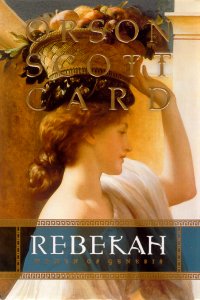
Rebekah
I wound up pleasantly surprised. About a year ago I read the book The Red Tent by Anita Diamant, which was absolutely terrible and almost completely anti-Biblical. I was afraid of another book like that, but Card provides a very interesting look into the story of Rebekah, Isaac's wife. He provides some back story to her upbringing in the first half of the book then transitions to a lengthy retelling of the Bible stories. Card stays (mostly) true to the Bible, and the few parts where he diverges are mentioned in the Preface with an explanation for why he interpreted things certain ways.
Card does a fantastic job creating the characters: they are all very real and very human. They each have a unique personality and complex relationships. There's not much beyond the characters, though. The story is mostly familiar (no fault of Card's of course), and the setting is never really developed. The writing itself is fairly easy to read and is mostly dialogue based. I would have loved to see into the minds of the characters a bit more.
In the end, this is an enjoyable and interesting read but probably could have dug a little deeper.
Rating: 3.5 out of 5 stars
24 books, 106 days...at this rate I'll read 82 books
Monday, June 13, 2011
Water
Solomon's narrative is compelling and rich, but this book is certainly not for everyone. At times it reads like a textbook and the intended audience mainly consists of scholars, students, and environmentalists.
Solomon makes a strong argument for water being the main force behind the progress of human civilization. In the final portion of the book he details the water supply and usage of each continent, highlighting areas which have severe water shortages. He claims that in the next 50 or so years we will see global conflict shift from being primarily over energy resources (oil) to being over fresh water. His outlook is quite frightening, and I'm inclined to believe it.
Rating: 5 out of 5 stars - it was fantastic!
finished this book on 6/8...23 books, 100 days...at this rate I'll read 85 books.
Wednesday, June 1, 2011
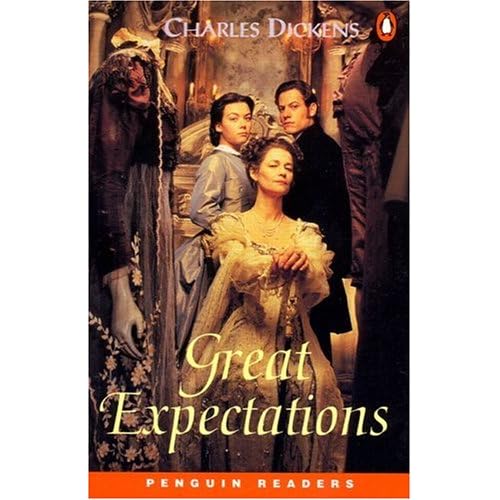
Great Expectations
Great Expectations is considered a classic, and deserves to be so. Dickens' possessed a gift for writing that few writers have ever had. His specific skill is the ability to weave a compelling dialogue with vivid description and detail. There are plenty of fine "idea people" today writing books - people who can come up with a good idea for a plot and then use their merely average writing skills (if that) to tell the story.
Great Expectations follows the adventures of Pip, and orphan who is raised by his sister and brother-in-law. His sister is cruel and his brother-in-law makes only just enough money to put food on the table. He takes breaks from his tough world to spend time keeping company with a rich elderly woman who never ventures outside. Along the way he befriends her adopted daughter, Estella.
Then, suddenly one day, Pip is surprised by a lawyer, Jaggers, who reveals to Pip that he has a mysterious benefactor who has provided for him to be trained (and funded) to be a proper (rich) English gentleman. Throughout his training, Pip learns many lessons, some the hard way, but emerges successfully as an English gentleman. In the final portion of the book, many secrets are revealed, including the identity of the benefactor.
I would recommend this book to anyone who enjoys reading. Great Expectations is a fairly easy but still rich book to read. Enjoy!
Rating: Classic (duh)
22 books, 92 days...at this rate I'll read 87 books
Subscribe to:
Posts (Atom)